Hunting the Wisconsin Northern Forest for Deer
Hunting the vast, often unforgiving expanse of Wisconsin's Northern Forest for deer can be an incredibly rewarding but equally challenging endeavor. Unlike the agricultural fields of the south, where deer might be concentrated around corn and soybeans, the Northwoods presents a puzzle of thick cover, lower deer densities, and expansive public land, leaving many hunters feeling overwhelmed and unsure where to begin. This comprehensive guide will arm you with the knowledge and strategies needed to successfully pursue whitetails in this unique and beautiful landscape, helping you unlock its secrets and experience the true wilderness hunt.
Understanding the Northern Forest Deer Habitat
The Northern Forest zone of Wisconsin is a world unto itself when it comes to whitetail deer habitat. It’s not just a collection of trees; it's a dynamic ecosystem that dictates everything from deer movement to population densities. Hunters who truly understand these nuances are the ones who consistently find success.
The Unique Ecology of Northern Wisconsin Forests
When you step into the Northern Forest, you're immediately struck by its character. You'll find vast stretches dominated by towering red and white pine, mixed with significant stands of aspen, birch, and various northern hardwoods like maple and oak. This mix creates a patchwork quilt of vegetation that offers both challenges and opportunities for deer. The soils up here are generally thinner and less fertile than those in the southern farming counties, meaning natural browse isn't as abundant or nutritious year-round. Deer rely heavily on specific plant communities and seasonal changes. Young aspen stands, for instance, are crucial. After a clearcut, these areas explode with new growth, providing a bounty of tender shoots and leaves that whitetails absolutely crave. However, as these stands mature, they become less valuable as forage, pushing deer to seek out newer cuts or areas with a higher diversity of browse. Understanding these successional changes is key to predicting where deer will be feeding at different times of the season.
Impact of Timber Management on Deer Movement
Timber management isn't just about economics in the Northwoods; it's a primary driver of deer behavior and habitat quality. The Wisconsin Department of Natural Resources (DNR), along with various county forests and private landowners, actively manages these forests through logging operations. Clearcuts, selective harvests, and prescribed burns all play a role in shaping the landscape. Fresh clearcuts, though initially barren, quickly regenerate with dense, young growth that offers prime browse and incredible security cover for deer. These are often hidden gems, creating pockets of high deer activity within otherwise vast, mature timber. Old logging roads and skid trails, while no longer active, often become natural travel corridors for deer, offering easier passage through dense woods. They can also provide a break in the canopy, allowing sunlight to reach the forest floor and encourage undergrowth. Hunters who spend time studying past and present timber activity, often visible on public land maps or through digital tools like GoHunt, gain a significant advantage. They can identify these habitat edges and transition zones where deer are most likely to move between bedding and feeding areas. It’s not uncommon to find areas that were logged 5-10 years ago to be bustling with deer activity due to the perfect mix of browse and cover.
Water Sources and Topography in the Northwoods
While the Driftless Area is famous for its steep ridges and coulees, the Northern Forest presents a more subtle, yet equally influential, topography. Here, the landscape is often characterized by numerous lakes, rivers, and extensive swamp systems, particularly cedar swamps. These water features aren't just scenic; they are critical elements in the deer's world. Swamps, especially dense cedar swamps, provide invaluable thermal cover during harsh winters and escape cover year-round. Deer will often bed deep within these nearly impenetrable thickets, emerging only to feed. Rivers and their associated riparian zones often act as natural travel corridors, providing a slightly easier path through dense woods and a consistent water source. Hunters frequently find deer sign concentrated along the edges of these waterways. Even subtle changes in elevation, like a small ridge overlooking a swamp or a slight rise through a low-lying area, can become significant travel routes or bedding sites in an otherwise flat expanse. Learning to read these topographical nuances, even on a smaller scale than in other regions, is essential for predicting deer movement.
Navigating the Challenges of Northern Forest Hunting
Let's be real, hunting the Northern Forest isn't like sitting in a food plot in farm country. It demands a different mindset, different tactics, and an acceptance of certain realities. Many hunters get frustrated because they try to apply southern Wisconsin strategies to a northern landscape, and it just doesn't work.
The Vastness and Low Deer Densities
One of the biggest hurdles for hunters in the Northern Forest is the sheer scale of the land combined with generally lower deer densities compared to central or southern Wisconsin. You can walk for miles through seemingly pristine woods and see very little fresh sign. This isn't because there are no deer; it's because they have an enormous amount of cover to spread out in, and their populations are naturally limited by the carrying capacity of the habitat, especially after a tough winter. The frustration of covering huge tracts of land only to find sparse evidence of deer can be disheartening. It requires a different approach to scouting and hunting. Instead of expecting to see deer around every corner, you must learn to "hunt the habitat" – identifying those small, specific pockets where deer are concentrated due to food, cover, or travel patterns. This means focusing on smaller, more precise areas within the vastness, rather than trying to cover everything. It often means more legwork, more patience, and adjusting your expectations regarding daily sightings.
Heavy Cover and Limited Visibility
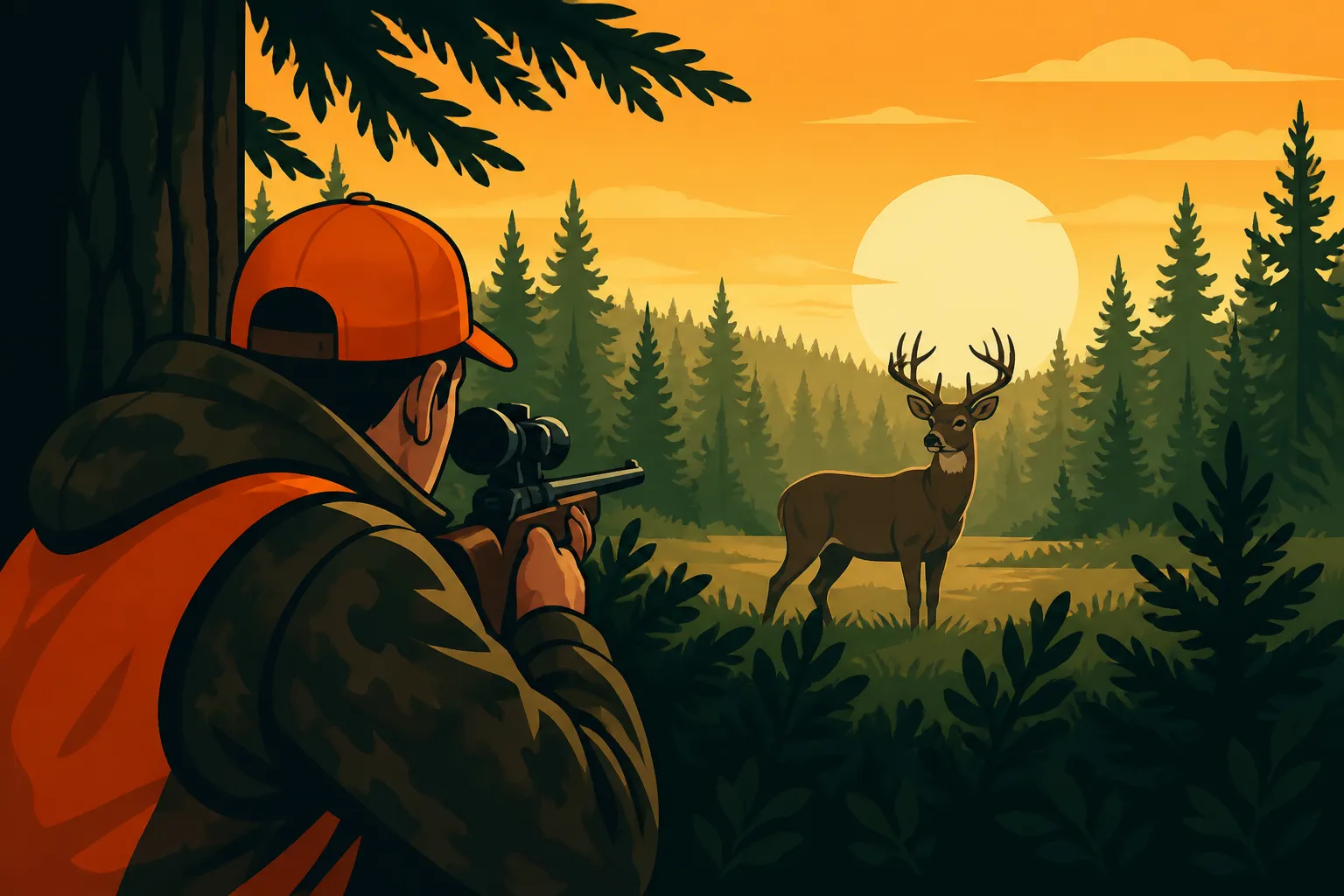
The thick cover found throughout the Northwoods, whether it's dense stands of pines, young aspen regeneration, or tangled alder thickets, is a double-edged sword. It provides incredible security for deer, making them feel safe and often allowing them to live longer and grow larger. However, it severely limits a hunter's visibility. Shots are often close, rarely exceeding 50-75 yards, and sometimes as close as 10-20 feet. This dense foliage makes it incredibly difficult to spot deer before they spot you, or to get a clear shooting lane. It also makes tracking a deer after the shot significantly harder, as a blood trail can quickly disappear in the leaf litter and undergrowth. Hunters need to adapt by slowing down their movements, relying more on their ears, and being prepared for quick, close-range shots. Your ability to pick out small details – an ear flick, a patch of brown hide, or the subtle movement of a branch – becomes paramount. Practicing target acquisition in dense cover, even with simulated branches, can be incredibly beneficial. This is where a tactic like Still-Hunting Wisconsin Cedar Swamps truly shines, as it forces you to become one with the environment.
Weather Extremes and Early Snow
Wisconsin's Northern Forest experiences some truly dramatic weather, and hunters need to be prepared for anything, especially as the season progresses. Early bow season can be mild, but by late October and certainly into November and December, you're looking at freezing temperatures, biting winds, and often significant snowfall. These conditions dramatically impact deer behavior and hunter comfort. Deep snow makes travel difficult for both deer and hunters, often concentrating deer into specific areas with better thermal cover, such as dense conifer stands or south-facing slopes. Extremely cold temperatures force deer to conserve energy, reducing their movement during the day and pushing them to feed more heavily during warmer periods or at night. For hunters, staying warm and dry becomes a full-time job. Sitting still in a treestand when the windchill is below zero requires specialized gear and mental toughness. Early snowfall, which is common in the Northwoods, can be a blessing and a curse. It makes tracking easier, but also highlights your presence and can make quiet movement more challenging. Hunters who embrace the cold and understand its impact on deer are often the most successful in the late season. A good Cold Weather Sitting Strategy is not just about comfort, but about effectiveness.
Pre-Season Scouting and Preparation
Success in the Northern Forest isn't found by simply showing up opening morning. It's built through diligent pre-season scouting and meticulous preparation, leveraging both modern technology and old-school woodsmanship. This is where you lay the groundwork for your hunt.
Utilizing Digital Tools for Remote Scouting
In the vastness of the Northern Forest, digital mapping tools are an absolute game-changer. Services like GoHunt, along with the Wisconsin DNR's Hunt Wild app and even free satellite imagery on platforms like Google Earth, allow you to "walk" hundreds of miles of public land from the comfort of your home. You can identify potential hot spots long before you ever step foot in the woods. Look for recent clearcuts (which appear as lighter green or disturbed areas on satellite imagery, often with distinct straight edges from logging roads), dense conifer stands (darker green, often indicating thermal cover), and the edges of swamps and waterways. Pay close attention to subtle topographical changes: small ridges, saddles between hills, or bottlenecks formed by water bodies can funnel deer movement. Old logging roads and utility lines often create natural travel corridors or openings that deer use to move through thick cover. Identifying these features remotely helps you narrow down massive tracts of land into manageable scouting areas. By dropping pins and marking areas of interest, you can maximize your limited time on the ground and focus on high-probability zones. Learning how to effectively use the Wisconsin Hunt Wild App can save you countless hours.
Ground Scouting for Sign and Travel Routes
Once you've identified potential areas through remote scouting, it's time to hit the woods. Ground scouting in the Northern Forest is a commitment, often requiring long walks through dense cover. Your goal is to confirm what you saw on the maps and find fresh deer sign. Look for active rubs and scrapes, which indicate buck activity, particularly in the weeks leading up to the rut. Pay attention to their direction and frequency – a string of rubs along a certain path often indicates a preferred travel route. Search for fresh tracks, especially where terrain changes or along the edges of different habitat types. Find the intersection of feeding areas (like young aspen regeneration or oak flats with acorns) and bedding areas (dense conifer thickets, steep hillsides offering thermal cover). These transition zones are often prime locations for a stand or for still-hunting. Don't overlook subtle funnels created by small ridges, brushy draws, or even slight openings in otherwise impenetrable cover. Remember, deer will always choose the path of least resistance if it still offers security. When you are Scouting Wisconsin Public Land Before Season, focus on these critical areas.
Understanding Food Sources in the Northern Forest
Unlike the agriculture-rich southern counties, natural food sources in the Northern Forest can be more dispersed and seasonal. Deer primarily rely on browse – the twigs, leaves, and buds of woody plants. Young aspen stands, as mentioned, are a goldmine for palatable browse. Maple, birch, and even some conifer species offer sustenance, especially during winter. Acorns, when present, are a highly sought-after food source. While oaks might not be as widespread as in other parts of the state, finding an active oak ridge, especially after an acorn failure elsewhere, can be a magnet for deer. Spend time identifying these specific food sources in your target area. Their availability can change year to year based on weather and mast crops. If you're hunting in an area with a Wisconsin Baiting and Feeding Ban, which is common in many northern counties due to CWD concerns, understanding natural food sources becomes even more critical. You'll need to focus on native forage and habitat improvement. Sometimes, the most important "food source" is simply where the youngest, most nutritious browse is readily available within easy reach of thick cover.
Effective Hunting Strategies for Northern Bucks
Hunting deer in the Northern Forest requires a blend of patience, stealth, and aggressive tactics. You'll need to be adaptable and ready to switch strategies based on the conditions and deer behavior you encounter.
Still-Hunting and Tracking in the Timber
Given the dense cover and the natural tendency for northern bucks to be more reclusive, still-hunting is an incredibly effective strategy. This isn't about covering ground quickly; it's about moving at a snail's pace, often taking minutes to move just a few yards. Your eyes and ears become your primary tools. You're looking for subtle flickers of an ear, a patch of deer hair, or the horizontal lines of a deer's back against the vertical trees. You're listening for the crunch of leaves, the snap of a twig, or the subtle swish of brush. The wind is your best friend – always hunt into it or with a crosswind. Focus on hunting habitat transitions: the edge of a cedar swamp, the boundary between a clearcut and mature timber, or along a subtle ridge leading to a feeding area. In fresh snow, still-hunting can transform into tracking. Finding fresh tracks and patiently following them, anticipating where the deer might be headed or bedded, is a classic Northwoods technique. It demands incredible focus and the ability to interpret subtle cues in the snow. Just remember that Where Northern Forest Bucks Bed is often deep in the thickest stuff, so be ready for a close encounter.
Treestand and Ground Blind Placement
While still-hunting is productive, setting up in a strategic location can also pay off, especially if you've identified key travel corridors or feeding areas. Treestands offer a clear advantage in visibility over dense undergrowth and help keep your scent above the deer's nose. In the Northwoods, look for stand locations along the edges of clearcuts, where deer move to browse, or overlooking old logging roads and trails that serve as natural highways. Funnels created by changes in topography or the intersection of different cover types are always prime spots. A stand set up on a ridge point that dictates deer movement between two drainages can be highly effective. If treestands aren't an option, or if the cover is too thick for elevated hunting, ground blinds can be excellent. Brush them in naturally along a subtle travel route or at the edge of a feeding area. The key is to blend in completely, breaking up your outline and eliminating any shine. Always prioritize scent control, especially when hunting from the ground.
Deer Drives on Northern Public Land
Deer drives might be a lost art in some areas, but they remain a powerful and often necessary tactic for harvesting deer in the Northern Forest, particularly on public land with its low deer densities and vast cover. A well-executed deer drive can push deer out of thick bedding areas or through natural funnels towards waiting standers. It's crucial to have a good understanding of the terrain, deer escape routes, and wind direction. Small groups of three or four hunters can be very effective. One or two hunters act as "drivers," moving slowly and deliberately through thick cover, while one or two "standers" position themselves strategically along known escape routes or natural funnels. Safety is paramount: always know where every hunter is located, wear plenty of blaze orange, and communicate constantly. This is not a chaotic run-and-gun; it's a strategic, coordinated effort. Consider practicing Deer Drives With Three or Four Hunters before the season to iron out any kinks.
Northwoods Deer Hunting Strategy Comparison
| Strategy | Best Use Case | Pros | Cons |
|---|---|---|---|
| Still-Hunting | Dense cover, fresh snow, finding reclusive bucks | Highly adaptable, covers ground, allows for tracking | Requires immense patience, stealth, keen senses, low visibility |
| Treestand | Defined travel corridors, clearcut edges, funnels | Elevates hunter, scent control, better visibility | Limited range, commitment to one spot, stand setup challenges |
| Ground Blind | Thick bedding areas, field edges (if any), swamp fringes | Excellent concealment, comfort, adaptable placement | Limited visibility, scent control crucial, need for natural cover |
| Deer Drive | Vast public land, pushing deer from thick cover | Effective for moving deer, good for multiple hunters | Requires coordination, safety concerns, can push deer too fast |
Gear and Equipment for Northwoods Success
The Northern Forest will test your gear as much as it tests your resolve. Having the right clothing, navigation tools, and firearm can make the difference between a miserable trip and a successful one.
Clothing and Layering for Cold Weather
The Northwoods can get brutally cold, especially during the peak of the deer season in November. Proper layering is not just about comfort; it's about survival and staying effective in the field. Start with a good base layer that wicks moisture away from your skin, preventing chills. Merino wool or high-quality synthetics are excellent choices. Your mid-layers should provide insulation – fleece, down, or synthetic puffies work well. For your outer layer, you need something that is quiet, windproof, and water-resistant (or waterproof). Even if it's not raining, wet snow or simply brushing against frosted branches can leave you damp. Brands like Sitka, First Lite, and Kuiu offer excellent technical hunting apparel designed for extreme conditions. Don't forget insulated, waterproof boots that can handle snow and slush, warm gloves or mittens (often with convertible fingers for shooting), and a blaze orange or pink hat and vest. Your Cold Weather Sitting Strategy absolutely depends on your clothing. Remember, you're not just dressing for the temperature; you're dressing for the wind, precipitation, and the long hours of sitting still.
Navigation and Communication Essentials
Cell service in the Northern Forest is spotty at best, and often non-existent in the deep woods. Relying solely on your phone for navigation is a recipe for disaster. A dedicated GPS unit is a non-negotiable piece of gear. Pair it with physical maps (topographical and forest service maps) and a compass, and know how to use them. Mark your truck, treestand locations, and any significant landmarks. Digital mapping apps like GoHunt can be downloaded for offline use, allowing you to view satellite imagery and property boundaries even without a signal, but always have a backup. For communication with hunting partners, two-way radios are essential, especially during deer drives or when splitting up to scout. Ensure they have sufficient range for the distances you'll be covering. A small, portable power bank for charging your phone or GPS is also a smart addition. The vastness of this area means that getting lost or separated can quickly turn dangerous. When you're far from any road, you really need to know your way back to your vehicle. Scouting With the Wisconsin Hunt Wild App is great, but don't rely on it entirely.
Firearms and Ammunition for Heavy Cover
Given the close-range nature of many shots in the Northern Forest due to dense cover, selecting the right firearm and ammunition is crucial. High-powered, flat-shooting rifles designed for long-range engagements are often overkill and can be problematic in thick timber. Instead, consider calibers that deliver significant energy at shorter distances and that handle well in tight spaces. The venerable .30-30 Winchester, for instance, remains a fantastic choice, as does the .30-06, .308, or .45-70 Gov't. Even a shotgun with slugs can be very effective, especially if you're hunting in a county that might have rifle restrictions. For Rifle Setups for Wisconsin Deer in the Northwoods, look for carbine-length barrels (18-22 inches) that are easier to maneuver. A low-power variable scope (1-4x or 2-7x) is ideal, offering a wide field of view for quick target acquisition at close range and enough magnification for slightly longer shots. Ensure your ammunition is suitable for timber hunting – good bullet expansion at closer velocities is important to drop deer quickly in dense cover and prevent long, difficult tracking jobs. You need a reliable, hard-hitting round that can anchor a deer when a follow-up shot might be obscured.
Post-Harvest Considerations and Meat Care
Congratulations, you’ve tagged a deer in the Northwoods! The work isn't over yet; now comes the critical phase of recovery and meat care, which can be particularly challenging in this environment.
Tracking and Recovery in Thick Woods
Successfully tracking a deer in the Northern Forest can be one of the most demanding aspects of the hunt. Dense undergrowth, fallen leaves, and thick conifer needles can quickly obscure a blood trail. If you hit a deer, give it time, especially if the shot wasn't perfect. An hour or more can often mean the difference between a short recovery and a lost animal. When you begin tracking, slow down. Mark the last spot of blood with a piece of flagging tape or toilet paper. Look not just for blood on the ground, but on brush, trees, and spiderwebs. Pay attention to track direction, broken twigs, and scuffed leaves. If the trail is sparse, expand your search in circles around the last known sign. If you lose the trail, back out, give it more time, and return with fresh eyes or a tracking dog (where legal). A good headlamp with a strong beam is essential if darkness falls. Recovering a Deer From a Coulee Bottom or a deep swamp in the Northwoods presents unique challenges that require planning and patience.
Field Dressing and Game Transport in Remote Areas
Once you've recovered your deer, prompt field dressing is vital, especially if temperatures are mild. The goal is to cool the carcass as quickly as possible to preserve the meat. In warm weather, opening the body cavity, removing the entrails, and propping it open with a stick to allow air circulation is critical. If you're deep in the woods, consider the "gutless method" where you bone out the deer in the field, carrying out only the meat, reducing weight and cooling time. Game bags are excellent for keeping the meat clean and allowing it to breathe. Transporting a deer out of remote Northern Forest areas can be a Herculean task. If snow is on the ground, a deer sled is invaluable. For areas without snow, a deer cart can work on old logging roads, but in really thick cover, you might be looking at physically dragging, boning it out, or even going back for a small ATV or side-by-side if permissible and practical. Know your limits and plan your extraction before you even shoot. Getting a Deer Out of a Wisconsin Swamp is no easy feat.
Dealing with CWD and Carcass Regulations
Chronic Wasting Disease (CWD) is a serious concern for Wisconsin's deer herd, and while more prevalent in southern Wisconsin, it exists in northern counties too. It's crucial for hunters to be aware of the latest CWD sampling requirements and carcass transport rules, which can change seasonally and by county. The Wisconsin DNR provides CWD sampling kiosks and voluntary testing opportunities. If you harvest a deer in a CWD-affected county, it's often recommended to have it tested. Be aware of any rules regarding transporting deer carcasses or specific parts out of CWD-affected zones. For example, often only deboned meat, capes, or clean skulls are allowed to cross county lines from areas with known CWD. Stay informed by checking the Wisconsin DNR website before your hunt. Adhering to Wisconsin Carcass Transport Rules not only helps in CWD management but also ensures you're hunting ethically and legally.
Disclaimer
Please remember that hunting regulations, seasons, and local conditions can change. Always consult the most current Wisconsin Department of Natural Resources (DNR) hunting regulations and local ordinances before heading afield. Safety should always be your top priority.