Black River State Forest Hunting
There's something truly special about hunting in a Wisconsin state forest, isn't there? It’s a chance to get away from the crowds often found on smaller parcels, to really immerse yourself in the wild. But let's be honest, these expansive tracts can feel overwhelming, like trying to find a needle in a haystack if you don't know where to start. This guide is all about helping you understand and effectively hunt the Black River State Forest, tackling its unique challenges head-on so you can have a more successful and rewarding experience.
Black River State Forest Hunting: An Overview for the Discerning Hunter
When you talk about Wisconsin hunting, places like the Northern Forest or the rugged Driftless Area often get the spotlight. But tucked away in central Wisconsin, primarily in Jackson County, lies the Black River State Forest, a true gem that offers a different kind of challenge and reward. This isn't your typical agricultural landscape, nor is it dense, unbroken northern timber. It's a fascinating mix that requires a shift in tactics, but it absolutely holds its own for hunters willing to put in the effort.
What Makes Black River Unique?
Black River State Forest truly stands out because of its diverse and somewhat unusual blend of habitats. You’ll find vast expanses of pine barrens here, characterized by jack pine and scrub oak, which are quite different from the hardwoods found elsewhere. Interspersed with these barrens are pockets of aspen, tamarack swamps, and even actively managed cranberry bogs that create unique ecosystems. This isn't a forest of towering, ancient trees; it's a dynamic landscape where different stages of forest succession offer varying levels of cover and food. It’s a place where you can walk for miles without seeing another soul, which for many of us, is the entire point of a public land hunt. The sheer scale and variety mean that while finding game can be tough, the sense of accomplishment is immense when you do. The open nature of some of the barrens can sometimes make you feel exposed, but it also provides opportunities for longer sightlines and different approaches than the typical tight timber hunting.
Key Species and Seasons in Black River
The habitat diversity within Black River State Forest naturally supports a wide array of game species, offering something for almost every hunter throughout the various Wisconsin Deer Seasons and Zones and other hunting periods.
White-tailed Deer: The flagship species for many Wisconsin hunters, White-Tailed Deer Across Wisconsin are certainly present here. While deer densities might not be as high as in the agricultural counties, the deer in Black River tend to be more nomadic, often using vast areas to find food and cover. They adapt incredibly well to the mixed pine and oak barrens, finding shelter in the thick pine stands and feeding in regenerating clearcuts or oak openings. Hunting these deer requires patience and a good understanding of their travel patterns through varied terrain. You'll often find them moving between different cover types throughout the day, so understanding how they utilize the different habitats—from dense pine to more open oak stands—is crucial. Expect to put on some miles.
Black Bear: Black River State Forest is also home to a healthy black bear population. While a bear tag in Wisconsin often requires accumulating preference points, for those who draw, Black River presents a fantastic opportunity. The dense cover and plentiful mast crops in some years provide excellent habitat. Whether you're hunting with dogs or baiting, or even trying a spot-and-stalk approach, the expansive nature of the forest means you're truly hunting wild bears. This isn't just a northern forest experience; central Wisconsin bears are a formidable challenge.
Wild Turkeys: Spring and fall turkey seasons offer exciting prospects in Black River. Turkeys thrive in the mosaic of open barrens and timbered areas. You'll hear them gobbling from the oak ridges in spring, and fall hunting can involve breaking up flocks in the larger timber tracts. The varied terrain means you might find them in unexpected places, from open fields on the forest edge to deep within the pine stands. Their ability to cover ground quickly makes scouting and knowing the lay of the land essential for success.
Ruffed Grouse and Woodcock: For the upland bird hunter, Black River is a paradise. The abundant aspen stands, particularly those in the 5-15 year age class, provide prime habitat for ruffed grouse. Similarly, the moist alder runs and young timber along creek bottoms are perfect for woodcock, especially during their migration periods. If you enjoy walking behind a good bird dog, or even just putting in the legwork to flush birds, Black River offers exceptional opportunities for Grouse and Woodcock Hunting in Wisconsin. It’s a truly immersive experience to wander through these covers, listening for the flush, a true test of wing-shooting skill.
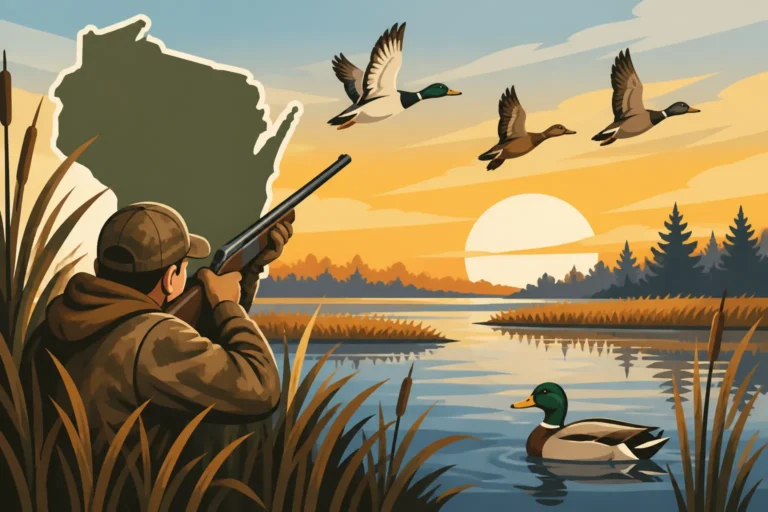
Waterfowl: While not primarily known as a waterfowl destination, the presence of the Black River itself and various wetlands, flowages, and managed cranberry bogs offers localized opportunities. Jump shooting ducks along the river or setting up decoys in smaller marsh pockets can yield surprising results, especially during peak migration. It’s definitely worth exploring if you enjoy a mixed-bag approach to your hunting.
General Regulations and Considerations
Hunting in a state forest comes with its own set of rules, which can sometimes differ from county forests or other public lands. Always consult the most current Wisconsin DNR regulations for Black River State Forest. Key points often include specific rules regarding Treestand Rules on Wisconsin Public Land, baiting regulations (which are often more restrictive or entirely banned in state forests, especially given CWD concerns in Jackson County), and vehicle access. Blaze orange or pink requirements are standard for gun deer seasons. Understanding these nuances before you go is paramount to a safe and legal hunt. For instance, knowing whether you can leave a portable stand overnight or if ground blinds need to be removed daily can save you a headache.
Navigating the Terrain: Tools and Tactics for Success
Hunting Black River State Forest isn't just about showing up; it's about smart navigation and employing tactics tailored to its unique environment. This isn't a place where you can just walk into the woods and expect deer to be everywhere. You need a plan, and you need to be prepared for the miles.
Essential Mapping Tools: onX Hunt and GoHunt
In an expansive forest like Black River, mapping technology isn't just a convenience; it's a necessity. Traditional paper maps have their place, but digital mapping apps like onX Hunt or GoHunt have truly revolutionized how we approach public land hunting. They allow you to see property boundaries with clarity, distinguishing state forest land from private parcels or other public holdings, which is absolutely critical for avoiding trespass and maximizing your hunting area. Imagine spending hours scouting, only to realize you've been on a small private tract – these apps prevent that frustration.
Beyond boundaries, these tools provide invaluable satellite imagery, showing you changes in timber type, open areas, thick bedding cover, and potential water sources. You can mark waypoints for promising sign, bedding areas, food sources, or even just your truck, ensuring you can navigate confidently even in unfamiliar terrain. What’s more, many areas of Black River State Forest have spotty cell service, so the ability to download maps for offline use before you leave home is a game-changer. I always make sure my areas are downloaded to my phone well in advance. This way, whether you're deep in a pine thicket or far from a main road, you'll always know exactly where you are and how to get back. Using the topography layers can reveal subtle ridges or drainages that deer might use for travel, even in seemingly flat pine barrens. Before I even set foot in the woods, I’m pouring over these maps, identifying potential funnels, escape routes, and bedding areas.
Hunting the Pine and Oak Barrens
The pine and oak barrens are the dominant feature of Black River State Forest, and they demand specific hunting strategies. Deer in these areas often use the dense pine stands for thermal cover in cold weather and security year-round. They'll browse on young pine shoots and seek out acorns from the scattered oak pockets.
Still-Hunting: This is often the most effective method in the barrens. Move slowly, deliberately, stopping frequently to glass ahead and listen. The crunch of pine needles can be loud, so pick your steps carefully. Focus on areas where pine transitions to oak, or where there are small clearings or openings that might offer browsing. Deer will often bed on the edges of these dense pine blocks, moving into more open oak savannas to feed. Look for subtle terrain features like small rises, depressions, or creek bottoms that offer natural travel corridors. The key is to cover ground, but to do it silently and observantly. When the leaves are down, those open barrens can look barren, but a keen eye can pick out rubs, scrapes, or fresh tracks. Consider how the wind plays into these open spaces, often swirling unpredictably, so a patient approach is key. You might also find success with Hunting Deer Without Bait in Wisconsin by focusing on these natural food sources and cover transitions.
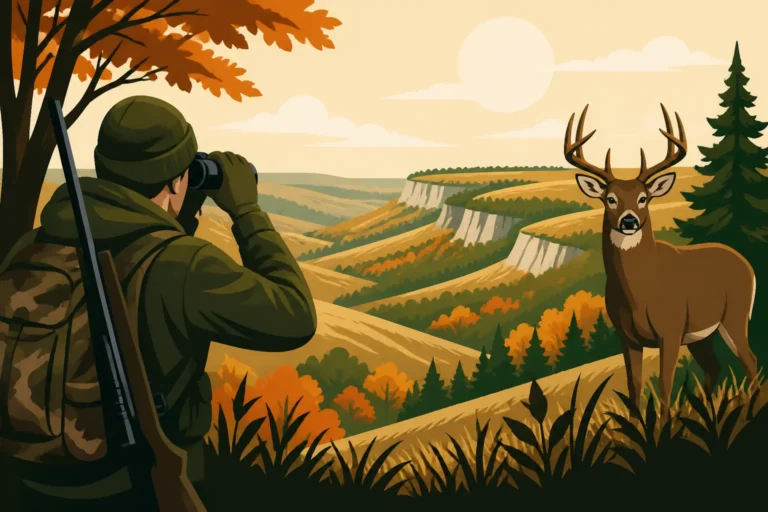
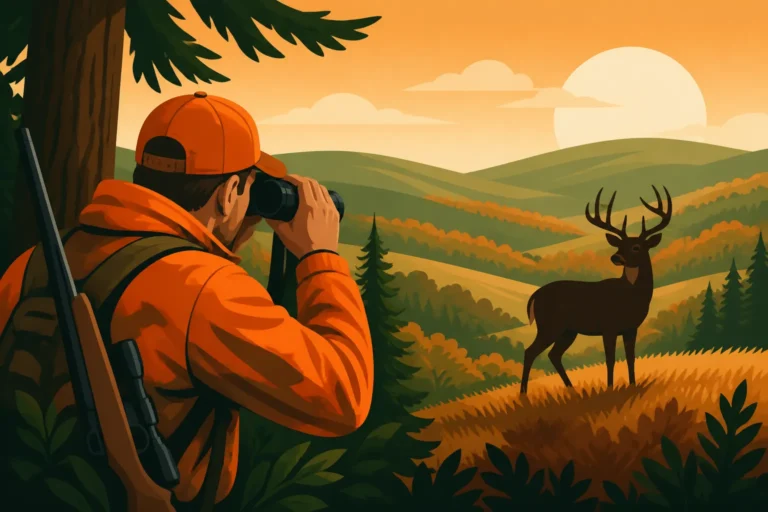
Glassing: With the more open nature of some barrens, quality binoculars are your best friend. Find a vantage point, even a small rise, and systematically glass the surrounding area. Look for horizontal lines (a deer's back) in a vertical world (trees). This is especially effective at dawn and dusk when deer are most active.
Funnels and Pinch Points: Even in seemingly uniform barrens, deer will utilize subtle funnels created by changes in vegetation density, small swamps, or even old logging roads. Identifying these pinch points on your mapping app and setting up a ground blind or stand can be highly effective. These could be narrow strips of oaks between two large pine blocks, or where a dense swamp pushes deer into a specific travel lane. Using a Ground Blind on Wisconsin Public Land can be an excellent tactic in these open-canopy areas, allowing you to set up on a travel corridor without needing to climb a tree.
Exploring the Forest's Wetland Areas
Beyond the barrens, Black River State Forest is punctuated by significant wetland areas, including tamarack swamps, beaver flowages, and the Black River itself. These areas, while often challenging to access, can be goldmines for certain species.
Deer Sanctuaries: Many hunters avoid the deep, wet swamps, which means deer often find sanctuary there. During gun seasons, especially, deer will retreat to these impenetrable thickets. If you're willing to don waders or waterproof boots and push into these areas, you might find undisturbed deer. Look for higher ground within the swamps, small islands, or even fallen trees that create dry bedding spots. Hunting the edges of these swamps, especially where they transition to drier ground, can be very productive. Deer will often stage in the swampy cover before moving out to feed in the barrens at dusk. Still-Hunting Wisconsin Cedar Swamps tactics can be adapted for the tamarack and alder swamps here.
Waterfowl Opportunities: As mentioned, the numerous small flowages, beaver ponds, and river backwaters can provide excellent jump-shooting or decoy hunting for ducks and geese. Scout these areas beforehand to identify active spots and access points. Early morning or late evening sits can be particularly productive. Remember, accessing some of these areas might involve substantial hiking and wading, so proper gear is essential.
Bear and Turkey Habitat: Bears will often use these dense, wet areas for bedding and security, especially if there are berry bushes or other food sources. Turkeys will sometimes roost over water in swampy timber, especially if they feel pressured. Don't overlook these often-ignored parts of the forest; they can hold surprising numbers of game.
Practical Considerations for Your Black River Adventure
A successful hunt in Black River State Forest isn't just about finding game; it's also about understanding the rules, planning for logistics, and respecting the natural environment. This forest is a shared resource, and a little forethought goes a long way.
Rules, Regulations, and Hunter Ethics
Hunting on public land, especially a state forest, means adhering to a specific set of rules. Beyond the general state hunting regulations, Black River State Forest has its own nuances. Always confirm the current regulations with the Wisconsin DNR website before your trip.
Treestands and Blinds: While portable treestands and ground blinds are generally allowed on state forest land, there are often rules about how long they can be left up, if at all, and how they must be marked. Some areas may require stands to be removed daily. For example, Treestand Rules on Wisconsin Public Land stipulate specific marking and removal times. Always verify these details for Black River. The state forest prioritizes public access and resource protection, so adhering to these rules helps keep the land open and enjoyable for everyone. Leaving no trace, including removing all your gear, is a fundamental ethic here.
Baiting and Feeding: Due to Chronic Wasting Disease (CWD) concerns, many counties in Wisconsin, including Jackson County where Black River lies, are under baiting and feeding bans. This means no baiting of deer, and often restrictions on feeding activities outside of hunting season. This necessitates a shift in hunting strategy, focusing more on natural food sources, habitat, and deer movement patterns rather than attracting deer to a specific spot. This is where Hunting Deer Without Bait in Wisconsin truly comes into play, relying on scouting natural sign and travel corridors.
Blaze Orange/Pink: During gun deer seasons, Wisconsin's blaze orange or fluorescent pink requirements are critical for safety. Ensure you and your hunting party are wearing the required amount of visible color. This is non-negotiable and essential for public safety in a popular hunting area.
Leave No Trace: This principle is especially important in a vast natural area. Pack out everything you pack in. Avoid unnecessary cutting of vegetation, and be mindful of your impact on the landscape. This ensures that Black River remains a pristine and enjoyable hunting ground for years to come.
Camping and Lodging: Making it a Multi-Day Trip
To truly experience Black River State Forest, a multi-day trip is highly recommended. This allows you to explore different areas, adapt to deer movement, and immerse yourself in the environment.
Designated Campgrounds: The forest offers several developed campgrounds, such as Castle Mound and East Fork, which provide amenities like vault toilets, water, and designated campsites. These are excellent options for those who prefer a more comfortable base camp. They can be popular, so plan ahead, especially during peak hunting seasons. Camping on Wisconsin Public Land outlines general rules, but always check site-specific regulations.
Dispersed Camping: For the more adventurous hunter, dispersed camping is often allowed in certain undeveloped areas of the state forest. This means you can pack in and set up a primitive camp away from designated sites, offering a deeper wilderness experience. Always check the specific rules regarding dispersed camping, including fire regulations and how far you must be from roads or water. This option provides a fantastic way to wake up right in your hunting grounds, ready to hit the woods at first light.
Nearby Towns: If roughing it isn't your style, towns like Black River Falls, Merrillan, and Millston offer motels, restaurants, and essential supplies. These towns can serve as a convenient base of operations, allowing you to venture into the forest during the day and return to comforts in the evening. Just be prepared for an early start if your hunting spot is deep in the woods!
Planning Your Logistics: Access and Game Care
Hunting the Black River State Forest means thinking about more than just your rifle or bow; it's about how you'll get in, get around, and ultimately, get your game out. The size and diverse terrain demand careful logistical planning.
Vehicle and ATV Access
Getting into and around Black River State Forest requires an understanding of its road and trail network. The forest is crisscrossed by a mix of paved roads, well-maintained gravel forest roads, and less-traveled two-track trails.
Forest Roads: Most major hunting areas within Black River are accessible via the network of forest roads. These are generally open to vehicle traffic, allowing you to get relatively close to your hunting spots. However, some roads may be seasonal or have restrictions, especially deeper into the forest. Always be mindful of changing conditions, particularly during wet weather or late-season snow, which can make some roads impassable for standard two-wheel drive vehicles. Parking can sometimes be limited, so be prepared to walk in a bit further than you might on private land.
ATV Trails: Black River State Forest is also well-known for its extensive ATV trail system. These trails are specifically designated for ATV use and often lead to areas that are otherwise difficult to reach. For hunters, this can be a tremendous advantage for accessing remote hunting grounds or for game recovery. However, it's absolutely critical to understand and adhere to ATV Rules on Wisconsin Forest Roads. You cannot simply drive your ATV anywhere you please. Trails are clearly marked, and off-trail vehicle use is strictly prohibited to protect the forest environment. Using an ATV responsibly means staying on designated trails and recognizing when it's appropriate to park and proceed on foot. This is where your onX Hunt or GoHunt app can again be invaluable, showing you which trails are open for ATV use.
Field Dressing and Game Recovery
Given the expansive and often rugged nature of Black River State Forest, field dressing and game recovery require careful consideration, especially if you're hunting solo or far from a vehicle.
Long Drags: Be prepared for a potentially long and challenging drag. Deer in Black River can be harvested deep in the pine barrens or thick swamps, meaning you might have to haul them for considerable distances over uneven terrain. A deer cart can be a lifesaver on some of the wider forest trails, but you'll likely still have to drag for a good portion of the journey. Consider the "gutless method" for field dressing, especially for larger deer or long recoveries, as it can significantly reduce the weight you need to transport.
Cooler Capacity and Game Bags: If you're hunting during early archery season, or even a warmer fall day during gun season, proper meat care is crucial. Carrying game bags can protect the meat from dirt and insects, and having sufficient cooler capacity in your vehicle will ensure the meat cools down quickly. If you plan to quarter a deer in the field, a sharp knife and a bone saw (or strong pruning shears) will be essential.
CWD Considerations: Jackson County, like many areas of Wisconsin, has had CWD detected. This means there are specific regulations regarding the transportation of deer carcasses. Always be aware of these rules. You might need to debone your deer in the field or take it to a designated CWD sampling station if you plan to transport it across county lines or out of state. Knowing the location of these stations in advance, or understanding the rules for processing your game at camp, will prevent any issues.
Hunting Black River State Forest is an adventure, a challenge, and a deeply rewarding experience for those who embrace its unique character. With proper preparation, the right tools, and a respectful approach, you’ll find yourself returning to this central Wisconsin gem year after year.
Disclaimer
This article is for general informational purposes only and does not constitute professional advice. Laws, prices and regulations vary by location and change over time. Consult a qualified professional for guidance on your specific situation.