Camping Rules on Wisconsin County Forest
It's incredibly frustrating when you're trying to plan a hunting trip to a beautiful Wisconsin county forest, only to find the camping rules seem to be hidden in a maze of websites, or worse, non-existent. You want to do the right thing, set up a respectful camp, and abide by the local guidelines, but sometimes it feels like you need a detective's badge just to figure out what's allowed. This guide is here to untangle that confusion, offering clear, actionable advice on how to understand and follow the camping rules on Wisconsin's often-overlooked county forest lands, ensuring your hunting adventure is both memorable and compliant.
The Allure of Wisconsin County Forests for Camping and Hunting
There’s a special kind of freedom that comes with camping on a county forest in Wisconsin. It’s not the highly regulated, designated campground experience you might find in a state park. This is about roughing it a little, finding your own spot under the stars, and truly immersing yourself in the wild. For hunters, this translates into unparalleled access and the ability to be right where the action is when dawn breaks.
Why County Forests are Different from State and National Lands
One of the biggest differences you'll encounter in Wisconsin is the distinction between county forests, state forests, and national forests. While they all offer public access, their management structures are quite distinct, and this directly impacts camping rules. State forests, like the Northern Highland-American Legion State Forest, often have designated rustic campsites, even if they aren't developed with amenities. National forests, such as the Chequamegon-Nicolet, might have broader, more consistent policies across their vast acreage.
County forests, however, are managed at the local level by individual county boards, in partnership with the state. This means a county forest in Langlade County might have slightly different rules than one in Douglas County. They're often less developed, focusing more on sustainable timber harvesting and multi-use recreation, which includes dispersed camping and hunting. The beauty of this local control is that these lands can feel more wild, less crowded, and often offer more flexible camping options than their state or federal counterparts. This localized management is why it's so important not to assume that what's legal in one county forest is permissible in another. Understanding these nuances is key to a successful, rule-abiding trip. You might be surprised by How Many Acres of Wisconsin County Forest are open to you.
General Expectations for Dispersed Camping
Dispersed camping, often called primitive or backcountry camping, means setting up your tent or camper outside of a designated campground. On county forests, this usually implies no amenities – no picnic tables, no fire rings, no vault toilets, and certainly no running water or electricity. You are expected to be entirely self-sufficient, and perhaps more importantly, adhere to Leave No Trace principles. This means packing out everything you pack in, including all trash, food scraps, and even human waste.
The appeal for hunters is clear: imagine waking up deep in the woods, a short walk from your pre-scouted stand location, rather than driving miles from a conventional campground. This ability to get truly remote and reduce your travel time can be a game-changer, especially during those crucial morning and evening hunts. The quiet solitude also helps you connect more deeply with the environment, often leading to better observations of wildlife movement and patterns. However, with this freedom comes responsibility to leave the site exactly as you found it, if not better.
Navigating Specific Camping Rules and Regulations
The biggest hurdle for many hunters looking to camp on Wisconsin county forests is the variability of the rules. While there are common themes, it's crucial to remember that each county can, and often does, set its own specific guidelines.
General Rules Across Most County Forests
While exact rules can differ, there are several common threads you'll find woven through most Wisconsin county forest camping regulations. Firstly, there's usually a limit on the length of stay. Often, this is around 14 days within a 30-day period, designed to prevent squatting and ensure fair access for everyone. You're also typically required to camp a certain distance from roads, established trails, and water bodies. This is for safety, to maintain aesthetics, and to protect sensitive ecosystems. For instance, many counties will stipulate you must be at least 50 feet from the centerline of any road or trail, and a similar distance from streams or lakes.
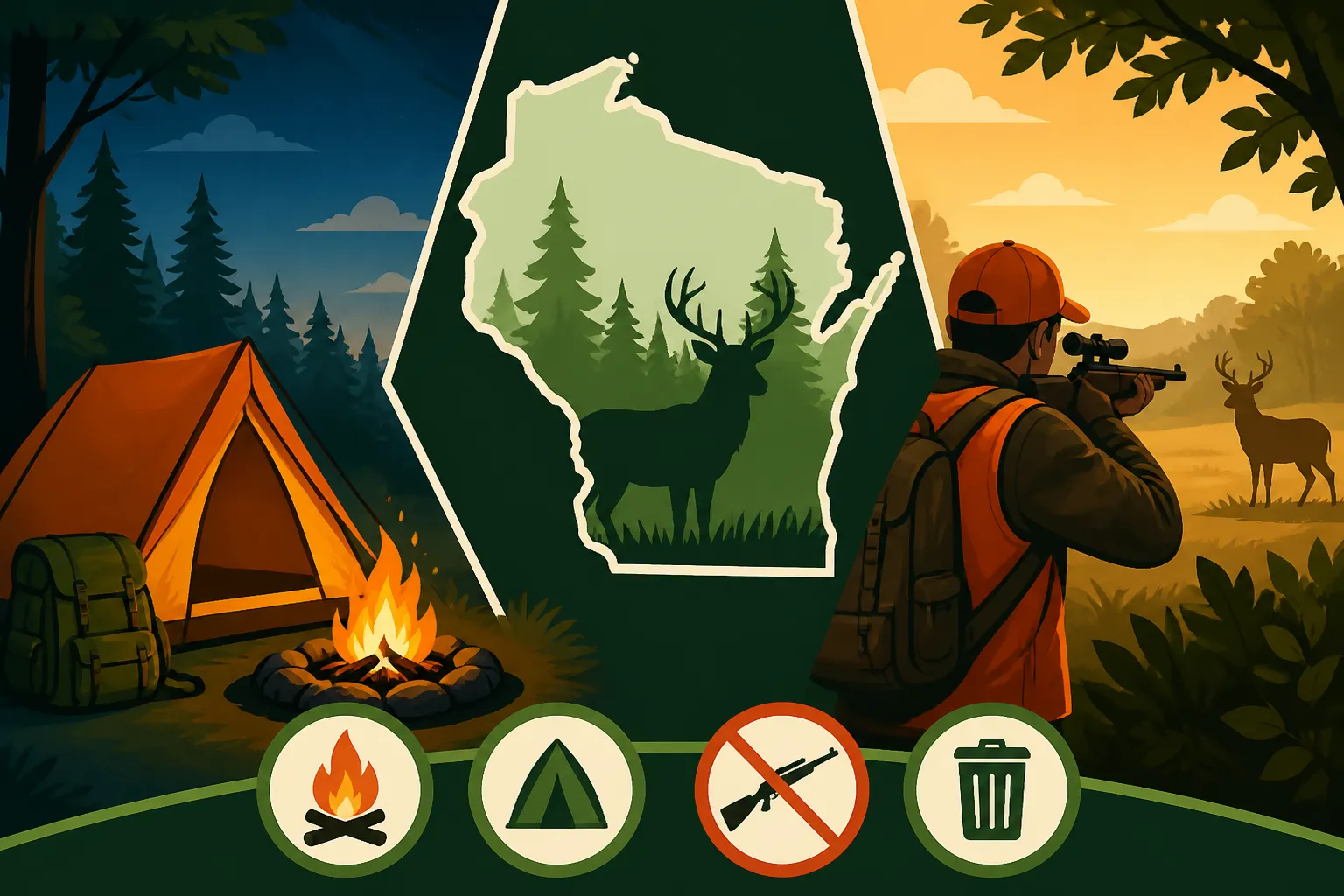
Fire restrictions are another critical component. While campfires are generally allowed, they must be contained in a safe manner, often in a self-built fire ring of rocks, and attended at all times. Always check current fire danger levels, especially during dry periods, as complete bans can be implemented. Baiting Rules on Wisconsin Public Land can also affect how and where you choose to set up your camp, as some restrictions might dictate where you can place certain attractants relative to public access points or residences.
Finally, waste disposal is paramount. "Pack it in, pack it out" is the golden rule. This includes all food packaging, cans, bottles, and even biodegradable items like fruit peels, which take a long time to decompose and can attract unwanted wildlife. You should also plan for proper human waste disposal, which usually involves burying it in a "cathole" at least 6-8 inches deep and 200 feet from water sources, camp, or trails.
How Rules Can Vary by County and Specific Property
This is where things get tricky, and where a little research goes a long way. The decentralized management of county forests means rules are definitively not uniform. What's perfectly fine in Bayfield County might be a no-go in Marinette County. Some counties might require a free permit for dispersed camping, even if others don't. Some might have stricter rules on vehicle access off established roads, while others are more lenient with designated pull-offs. For example, some counties might restrict camping to certain blocks of land or specific access points during peak hunting seasons to manage pressure.
This is precisely where modern mapping tools become indispensable. Apps like onX Hunt and GoHunt can show you land ownership boundaries, often indicating county forest lands. More importantly, many of these apps now integrate specific county regulations or provide links to local DNR or county forest websites, saving you a tremendous amount of time. You can zoom in on your preferred hunting area, see the boundaries, and then cross-reference that with the specific county's rules. This proactive approach helps prevent any unpleasant surprises and ensures you're camping legally and responsibly. Using tools like onX Layers for Wisconsin Land Status can be a game changer for deciphering these boundaries.
| Feature | General Expectation (Most County Forests) | Potential County-Specific Variation |
|---|---|---|
| Length of Stay | 14 days within a 30-day period | Shorter/longer limits; specific seasonal restrictions |
| Distance from | 50 ft from roads, trails, water | Stricter distances; specific designated sites only |
| Campfires | Permitted, contained, attended | Permit required; seasonal bans; portable stoves only |
| Vehicle Access | On designated roads/parking areas | Off-road access in specific areas; no overnight parking |
| Permits | Generally not required | Free or paid permit required for dispersed camping |
| Site Impact | Leave No Trace; pack out all waste | Designated trash receptacles (rare); specific waste protocols |
Practical Tips for Respectful and Legal Camping
Going beyond just knowing the rules, there are practical steps you can take to ensure your camping experience on Wisconsin's county forests is not only legal but also leaves a minimal footprint and respects the resource for others.
Researching Your Chosen County Forest
Before you even load up the truck, dedicate time to thorough research. Start by identifying the specific county forest you intend to visit. A simple web search for "[County Name] County Forest Camping Rules" is often the best first step. Look for the county's official website, often under their parks, recreation, or land and water conservation department. These sites usually have a section dedicated to forest use regulations. Sometimes, the rules are embedded in larger PDFs or management plans, so be prepared to dig a little.
If the information isn't clear online, don't hesitate to call the county forest administrator's office directly. They are often the best source for current and accurate information. Many counties also publish maps that might indicate areas closed to camping or specific access points. You can also utilize mapping applications like onX Hunt. Beyond showing property lines, these apps can often link to regulatory information or at least provide you with the exact names and contact details for the land managers. This due diligence not only keeps you out of trouble but also helps you understand the local management philosophy, which can deepen your appreciation for the land. Thinking about Scouting Wisconsin Public Land Before Season includes knowing where you can set up camp.
Setting Up Your Camp Responsibly
Once you've done your homework and arrived at the county forest, selecting your actual campsite requires careful thought. Look for sites that show previous use, but are still clean, to minimize new impact. Avoid fragile vegetation, wet areas, or anything that looks like it could be a wildlife trail. The goal is to choose a spot that’s not visible from roads or trails, ensuring solitude and respecting the experience of others.
When it comes to food, secure it properly to avoid attracting animals. Bears, raccoons, and even smaller rodents are opportunistic, and easily habituated to human food. Consider using bear-resistant containers, hanging food from a tree limb at least 10-12 feet off the ground and 4 feet from the trunk, or storing it in your vehicle. For water, assume all natural sources need treatment. Carry a water filter, purification tablets, or be prepared to boil water. Never use soap or wash dishes directly in a water source; carry water away and dispose of greywater by broadcasting it over a wide area, far from your camp and any water bodies. These small efforts contribute significantly to preserving the integrity of the forest.
Combining Camping with Your Hunt
For many of us, camping on a county forest is intrinsically linked to hunting. Having your camp set up close to your hunting grounds offers immense strategic advantages. You can be in your treestand well before dawn, without the commotion of driving in, and stay out later in the evenings. This close proximity also allows for easier mid-day breaks back at camp for warmth or food. Just be mindful of local regulations regarding leaving equipment overnight. While Treestand Rules on Wisconsin Public Land generally allow stands to be left during the season, verify if your specific county forest has additional stipulations for camping gear or pop-up blinds.
During gun deer season, remember that the blaze orange (or pink) requirements extend beyond actively hunting. Even when walking to and from your stand or moving around your campsite, you typically need to display the required amount of outer clothing. This is for your safety and the safety of others enjoying the forest. Being prepared for varying weather conditions is also key; a November hunt can bring anything from mild days to sudden snowstorms, so ensure your tent and sleeping system are robust enough to handle cold, wind, and precipitation. Being able to quickly retreat to a nearby warm camp can make all the difference in comfort and staying power.
Common Pitfalls and How to Avoid Them
Even with the best intentions, it's easy to fall into common traps when camping on diverse public lands like Wisconsin's county forests. Being aware of these pitfalls beforehand can save you a lot of headache and potential trouble.
Overlooking Local Ordinances
The most significant pitfall is assuming that general state-level hunting or camping regulations cover everything on a county forest. As we've discussed, individual counties can and do enact their own ordinances that supplement or even slightly modify state rules. These could include specific requirements for dispersed camping permits, limits on the type of shelter you can use (e.g., no permanent structures), or even restrictions on where you can park vehicles overnight, particularly if a road is not regularly plowed in winter. For example, some counties might have specific rules about firewood collection or the use of ATVs on certain trails, even if the general county forest allows them. Vehicle Rules on Wisconsin Public Land are especially important to review.
The consequences of overlooking these local ordinances can range from a polite warning from a county warden or sheriff's deputy to a hefty fine, and in some cases, even confiscation of equipment or removal from the forest. It's not worth the risk, especially when a simple phone call or a few minutes on a county website could provide the clarity you need. Always err on the side of caution and verify the rules for the specific county you plan to visit.
Managing Waste and Impact
Another common area where campers inadvertently run into issues is improper waste management. "Pack it in, pack it out" truly means everything. I've seen countless times where folks think burying their food scraps is acceptable because they're "biodegradable." While true, these items decompose slowly, attract animals, and can leave unsightly messes. Banana peels and orange rinds can take years to break down, and in the meantime, they stand out like a sore thumb.
Human waste also needs careful handling. Digging a proper "cathole" is essential. This means going at least 200 feet from any water source, trail, or camp, and digging a hole 6-8 inches deep. Once you've done your business, cover it completely with soil and natural materials. Toilet paper should ideally be packed out with your other trash, or if buried, ensure it's fully covered and you're in an area where it will decompose quickly. Never leave it exposed. Even something as seemingly innocuous as greywater from washing dishes should be strained and broadcast widely, far from camp and water sources, to prevent concentrated impacts. Your goal should be to leave your campsite so that a casual observer wouldn't even know you were there. This protects the environment, respects other users, and ensures these precious county forests remain open for all to enjoy.
Disclaimer
This article is for general informational purposes only and does not constitute professional advice. Laws, prices and regulations vary by location and change over time. Consult a qualified professional for guidance on your specific situation.