Where Wisconsin Wolves Live
Many folks who spend time in Wisconsin’s wild places, whether hunting deer, grouse, or just hiking, often wonder about the elusive gray wolf. There's a natural curiosity, and sometimes a bit of concern, about where these apex predators roam, especially when you're planning an outing or managing your land. Understanding the distribution of wolves in Wisconsin is crucial for appreciating our ecosystem, practicing responsible hunting, and ensuring that both wildlife and people can coexist safely. This guide will take a deep dive into where Wisconsin's wolves have established their territories, from their historical comeback to their current range and the factors that influence where they call home.
The Remarkable Comeback of Wisconsin's Wolves
It's hard to imagine now, but not so long ago, wolves were largely absent from Wisconsin. By the mid-20th century, aggressive eradication programs had pushed them to the brink, nearly wiping them out of the entire Lower 48 states. It’s a somber chapter in our wildlife history, reflecting a time when fear and misunderstanding often dictated conservation efforts.
However, nature is resilient, and through a combination of protection under the Endangered Species Act and natural recolonization from Minnesota, wolves began to find their way back to Wisconsin in the 1970s. This wasn't an overnight explosion; it was a slow, steady return, with individual animals venturing into suitable habitats, finding mates, and gradually establishing new packs. The story of their return is a testament to what can happen when species are given a chance to recover. If you're interested in the journey of their protection and management, you might find more details in Wisconsin Wolf Delisting History.
Natural Recolonization from the North
The primary avenue for wolf recolonization was, quite naturally, from the robust wolf populations thriving in northern Minnesota. These wolves, seeking new territories and mates, dispersed eastward into the vast, forested landscapes of northern Wisconsin. Think of it like a ripple effect: as territories filled up in Minnesota, younger wolves would strike out on their own, often traveling hundreds of miles, until they found unoccupied suitable habitat in our state.
This slow expansion meant that the initial recovery was concentrated in the most remote, wild areas of Wisconsin – places with low human density, abundant prey, and extensive forest cover. These pioneering wolves weren't looking for quick meals in suburbia; they sought the wilderness where they could live out their natural lives with minimal human interference.
A Growing and Spreading Population
From those early, tentative steps, Wisconsin's wolf population has steadily grown. Over the decades, researchers and wildlife managers have meticulously tracked their numbers and distribution. The overall trend has been one of expansion, not just in population size, but also geographically. As core territories became saturated, wolves began to push into new areas, sometimes surprising people with their presence in places they hadn't been seen for generations.
This expansion often occurs along forested corridors, following river systems or continuous stretches of timber, allowing them to move without crossing vast open agricultural fields or heavily populated zones. This dynamic growth means that the "where wolves live" isn't a static answer but one that continues to evolve. You can get a sense of the overall population figures and trends in How Many Wolves Wisconsin Has.
The Core of Wisconsin's Wolf Country
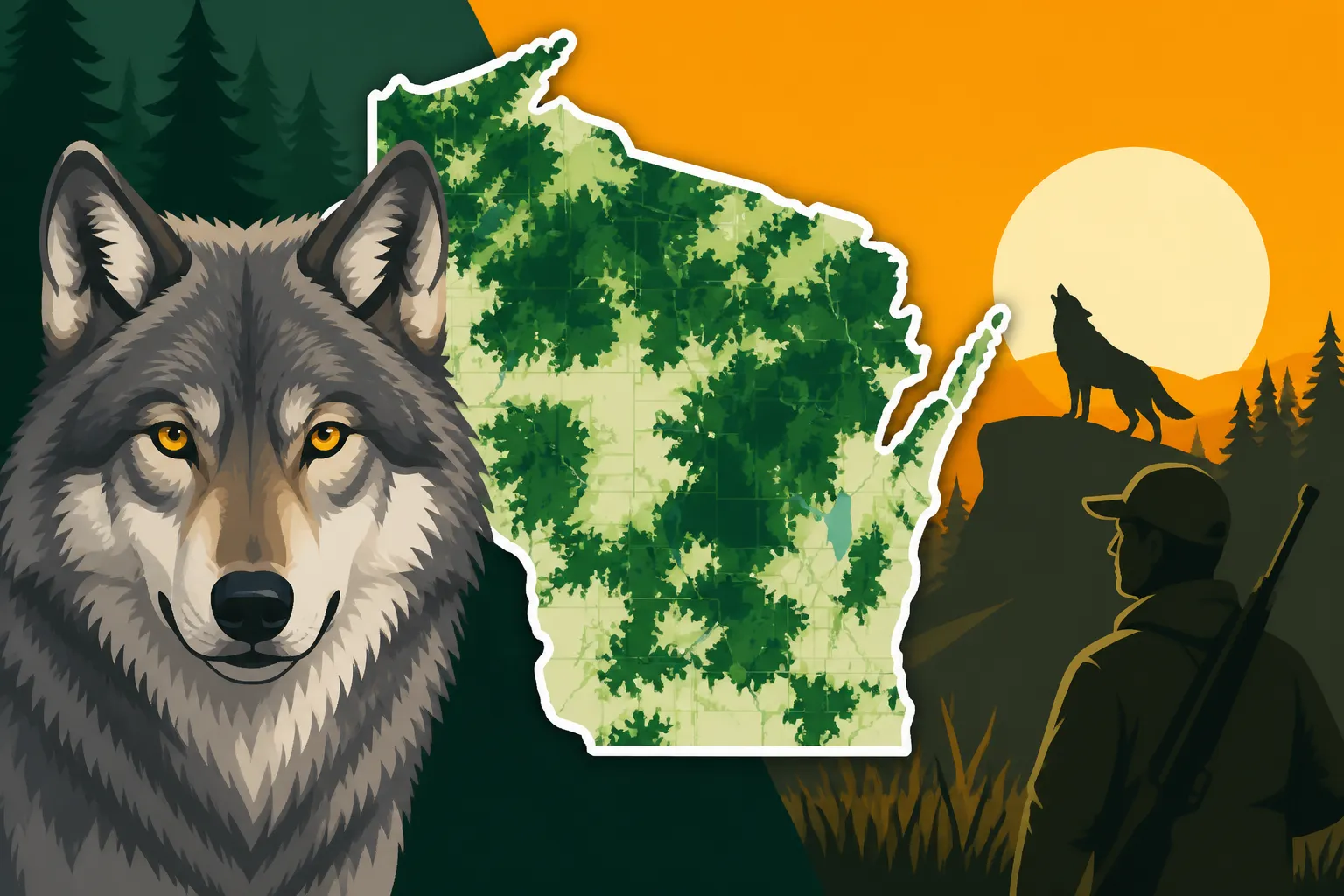
When we talk about where Wisconsin wolves live, we're primarily looking at the northern third of the state and extending into parts of the central forest region. These areas provide the expansive, contiguous habitat wolves need to thrive, largely away from dense human development.
Northern Wisconsin: The Heart of Wolf Territory
The vast majority of Wisconsin's wolf packs reside in the dense forests of northern Wisconsin. This region, characterized by its extensive public lands, remote tracts of private timber, and relatively low human population density, offers an ideal environment for wolves.
Think about places like the Chequamegon-Nicolet National Forest, the many large county forests, and the Northern Highland-American Legion State Forest. These are sprawling landscapes with millions of acres of mixed hardwood and conifer forests, interspersed with wetlands, lakes, and rivers. This isn't just a convenient place for wolves; it's essential habitat. These large, unbroken blocks of timber provide cover for denning, ample space for hunting, and isolation from human activity. Hunters who frequent these areas for species like Wisconsin's Black Bear Population or Hunting the Wisconsin Northern Forest for Deer are often sharing the woods with wolves, even if they never see one. If you're using a mapping tool like the GoHunt app for your hunting endeavors, you'll see these vast green stretches of public land clearly, indicating prime wolf habitat.
Key counties where you'll find significant wolf populations include:
- Bayfield, Sawyer, Ashland, Iron, Vilas, Oneida, Forest, Florence, Marinette, Douglas, Washburn, Burnett, Polk, Price, Rusk, Taylor, Lincoln, Langlade, Oconto, Shawano.
These counties typically have large tracts of public land and a high proportion of forested landscape, which are critical for wolf survival.
Central Wisconsin: Expanding Southward
While the north remains the stronghold, wolves have also expanded into parts of central Wisconsin, particularly into the large public forest lands. This includes areas like the Black River State Forest, Necedah National Wildlife Refuge, and the sprawling complexes of the Jackson, Juneau, and Wood County Forests. These areas offer a mix of pine barrens, oak forests, and extensive wetlands that, while different from the deep northern woods, still provide enough cover and prey to support wolf packs.
The expansion into these central counties signifies the adaptability of wolves and the continued growth of their population. While densities might not be as high as in the northernmost counties, their presence here means hunters and outdoor enthusiasts need to be aware that wolf encounters or sign can be found further south than historically anticipated. When planning your trips, remember that a tool like GoHunt can help you overlay public land maps with your knowledge of wolf range to identify potential hot spots.
The Role of Prey Species and Habitat Connectivity
A critical factor dictating where wolves live is the availability of their primary prey: white-tailed deer. White-Tailed Deer Across Wisconsin are abundant across much of the state, but dense deer populations within forested areas are particularly important for wolves. Wolves are highly mobile and can cover vast distances, following deer movements or patrolling extensive territories in search of food.
Beyond deer, wolves will also prey on other animals like beaver, snowshoe hare, and occasionally moose or elk, where available. In fact, understanding What Wolves Eat in Northern Wisconsin provides further clues to their habitat preferences. The presence of the recently re-established How Many Elk Wisconsin Has herds in parts of northern and central Wisconsin also represents a potential food source, though deer remain paramount.
Habitat connectivity is equally important. Wolves need corridors to move between larger habitat blocks, whether it's unfragmented forest, river bottoms, or even less developed agricultural edges. These corridors allow for gene flow between packs and facilitate the dispersal of young wolves seeking new territories.
Factors Shaping Wolf Distribution
Wolf distribution isn't just about geography; it's a dynamic interplay of ecological factors, human land use, and management decisions.
Prey Availability and Habitat Suitability
As mentioned, deer are the lifeblood of Wisconsin's wolf population. Areas with healthy, robust deer herds within extensive cover are prime wolf habitat. If a region sees a significant decline in deer numbers, due to harsh winters, disease, or overharvest, it can impact wolf territory size and even lead to local pack shifts.
Habitat suitability extends beyond just trees. It includes access to water, denning sites (often in remote, undisturbed areas with good cover like fallen logs or brush piles), and rendezvous sites for raising pups. Large blocks of undisturbed forest are preferred, as wolves are naturally wary of humans and tend to avoid areas with high road densities or frequent human activity.
Human Population Density and Land Use
This is perhaps the biggest limiting factor for wolf expansion. While individual wolves might occasionally wander close to human settlements or agricultural areas, established packs generally thrive where human disturbance is minimal. High road density, extensive agricultural fields, urban sprawl, and frequent recreational use of an area tend to deter wolves from establishing long-term territories.
However, it's worth noting that wolves are intelligent and adaptable. In some areas, packs have learned to coexist near the edges of human development, particularly if there are large blocks of undeveloped land nearby and if human interaction is limited. This is often where conflicts, such as Wolf Depredation on Wisconsin Hounds, can arise when hunting dogs venture into wolf territories.
Management Zones and Protection Status
Wisconsin's wolf management history is complex, oscillating between federal protection and state management. These shifts in legal status and management strategies can influence population dynamics and, indirectly, distribution. For instance, when wolves were federally protected, their population growth and expansion were largely unhindered by human intervention (like hunting seasons). When under state management, different harvest quotas and zones can be implemented, which can affect localized populations, though the overall range is more tied to habitat.
Regardless of management status, understanding the core zones established by the state for tracking and management purposes can help delineate where wolves are consistently present. The Wisconsin DNR actively monitors wolf populations, and their data helps inform our understanding of current distribution.
Identifying Wolf Presence and Coexistence
For hunters, hikers, and landowners, recognizing signs of wolf presence is part of being observant in the outdoors. Coexisting with these powerful animals requires knowledge and respect.
Signs of Wolf Activity
While seeing a wolf is a rare and special event for most, their presence leaves many clues:
- Tracks: Large, oval paw prints (typically 4-5 inches long, larger than a coyote's) often traveling in a straight line, known as a "direct register" gait where the hind foot lands in the print of the front foot.
- Scat: Wolf droppings are often large, rope-like, and may contain hair and bone fragments from prey. They're often found on prominent features like logging roads or trail intersections.
- Howls: A haunting and unmistakable sound, especially at dusk or dawn. Wolves howl to communicate with pack members, mark territory, or rally before a hunt.
- Kills: Discovering a large animal carcass with signs of predation (drag marks, distinct bite marks, evidence of consumption over several days) can indicate wolf activity.
- Sign along logging roads or trails: Wolves frequently use logging roads and game trails for travel, making them good places to look for tracks or scat.
Using mapping tools, like the GoHunt app mentioned earlier, can help you identify remote logging roads and trails in public land areas like the Public Hunting Land in Wisconsin where you might specifically look for these signs.
Sharing the Landscape Safely
For hunters, especially those with dogs, understanding wolf range is crucial. Bear hunters, in particular, often operate in prime wolf country, and incidents of Wolf Depredation on Wisconsin Hounds can occur. Being aware of current wolf activity in your hunting area is a responsible practice. Some hunters choose to avoid areas known for high wolf density, especially during specific times of year.
For hikers and campers, common-sense practices apply: store food securely, keep pets on leashes, and never approach a wild animal. While wolves are generally wary of humans, maintaining a respectful distance is always advised.
For landowners, especially those on the fringe of wolf range, securing livestock and understanding local wildlife services for reporting depredation are important. The state has programs in place to assist with verified losses.
Where to Look for More Information
Keeping up-to-date with current wolf distribution is a continuous process. The Wisconsin Department of Natural Resources (DNR) is the primary source for the most accurate and recent information on wolf populations, range maps, and management strategies. They conduct annual surveys and publish reports that detail population estimates and areas of activity.
Organizations involved in wolf conservation or research also provide valuable insights and educational resources. Understanding these magnificent creatures and their role in Wisconsin's ecosystems is a shared responsibility for all who appreciate our wild heritage. The vastness of How Many Acres of Public Land Wisconsin Has provides the necessary expanse for wolves to thrive, ensuring they remain a vital part of the Badger State's wild identity.
Disclaimer
This article is for general informational purposes only and does not constitute professional advice. Laws, prices and regulations vary by location and change over time. Consult a qualified professional for guidance on your specific situation.