Wisconsin Pine Barrens Public Ground
Finding truly wild, expansive public land in Wisconsin, especially ground that offers a different kind of hunting challenge than the typical hardwoods or farmlands, can feel like searching for a needle in a haystack. This guide dives deep into hunting the unique Wisconsin Pine Barrens public ground, revealing where these special ecosystems are found and how to effectively pursue game within them, helping you unlock new hunting adventures away from the crowds.
The Unique Landscape of Wisconsin's Pine Barrens
Wisconsin's Pine Barrens are a truly special and often overlooked ecosystem, far removed from the dense forests or agricultural fields many hunters are accustomed to. These aren't your typical vast stands of white pine timber. Instead, picture sprawling, sandy plains dominated by jack pine and scrub oak, interspersed with grassy openings, wetlands, and scattered pockets of more mature timber. This unique blend of habitat creates a distinct challenge and reward for hunters.
Ecological Significance and History
The Pine Barrens are a relic of a bygone era, shaped by glacial forces and, historically, by fire. The sandy, nutrient-poor soils favor species adapted to harsh conditions, primarily jack pine and various oaks like northern pin oak. Historically, frequent wildfires, both natural and set by indigenous peoples, maintained this open, savanna-like structure, preventing it from transitioning into denser hardwood forest. This fire-adapted landscape supports a unique array of flora and fauna, many of which are specifically adapted to these fire-dependent communities. Understanding this ecological history helps hunters appreciate why the barrens look the way they do and how game animals utilize them.
Today, controlled burns and careful habitat management by the Department of Natural Resources (DNR) and other conservation groups work to mimic these historical fire regimes, maintaining the open, brushy character crucial for many game species. Without active management, these areas would eventually become overgrown and lose the very qualities that make them unique hunting grounds. This ongoing effort ensures that the Pine Barrens remain a viable habitat for species like the sharp-tailed grouse, which is inextricably linked to these specific conditions. When you're walking through a recently burned area, you're seeing a direct result of these efforts to preserve a rare and valuable habitat.
Distinguishing Features for Hunters
From a hunter's perspective, the Pine Barrens offer a distinct set of characteristics. Unlike a dense northern forest where visibility is often limited to a few dozen yards, the barrens can offer surprising sight lines across vast, rolling expanses of low-growing scrub. However, don't let the "open" appearance fool you; the dense, thorny underbrush and thickets of young jack pine can be incredibly difficult to penetrate, forming formidable natural sanctuaries for game. Travel can be tough on foot, often requiring pushing through thick tangles of brush.
The terrain is generally flat to gently rolling, a stark contrast to the dramatic ridges and valleys found in the Driftless Area Deer Hunting in Wisconsin. Water sources can be scarce in some areas, especially during dry periods, making proximity to wetlands or sloughs key for game movement. Pockets of more mature timber, particularly red pines or remnant white pines, often provide crucial bedding cover or thermal protection during harsh weather, acting as magnets for deer. The sandy soil, while sometimes making tracking difficult, also means that ground cover often consists of a soft carpet of pine needles or thin grass, allowing for quiet movement if you watch your step.
Identifying Public Hunting Opportunities in the Barrens
Finding true Pine Barrens public ground in Wisconsin requires knowing where to look, as this unique habitat isn't spread uniformly across the state. While there are some scattered pockets, the most significant and accessible barrens ecosystems are concentrated in specific regions, primarily in the northwestern part of the state. These areas offer vast stretches of huntable land managed by various agencies, but understanding how they are designated and accessed is crucial.
Key Counties and State Properties
The bulk of Wisconsin's Pine Barrens, and thus your best bet for public hunting, lies within counties like Douglas, Burnett, and Washburn. These counties host significant portions of the original barrens landscape. Within these regions, several key state-managed properties are specifically focused on preserving and managing barrens habitat. The Douglas County Wildlife Area, for instance, is a prime example, offering thousands of acres of classic jack pine and scrub oak country. Another notable area is the Crex Meadows Wildlife Area in Burnett County, which is renowned for its diverse barrens and wetland habitats, particularly for sharp-tailed grouse and other grassland species.
These state properties are typically managed to enhance wildlife populations and public recreation, including hunting. They often have specific parking areas and designated access points. It's always a good idea to check the Wisconsin DNR website for specific property maps and any special regulations that might apply, as some areas may have unique rules regarding vehicle access, dog training, or specific hunting seasons. Understanding the scale of these areas, which often encompass thousands of acres, is key to developing a solid hunting plan that allows you to get away from other hunters.
County Forests and MFL Opportunities
Beyond dedicated state wildlife areas, many county forests in the barrens region also provide excellent public hunting opportunities. Counties such as Douglas, Burnett, and Washburn manage substantial tracts of forest land, much of which contains significant barrens components. These county forests are often more remote and less heavily pressured than some state-managed areas, especially if you're willing to walk a bit further from main access roads. They are typically open to public hunting, though specific regulations can sometimes vary from county to county, so checking the individual county forest department's website is a wise move before heading out.
Additionally, some parcels under the Managed Forest Law (MFL) program may be open to public access in these barrens counties. How to Tell MFL Open From Closed is critical, as not all MFL land is open to public hunting, and those that are have specific rules. You'll need to consult the DNR's online mapping tools or use a reliable hunting app to identify MFL "open" parcels. These can be fantastic finds, often bordering other public lands and providing additional acreage to explore. Always respect private property boundaries when hunting MFL land, as the open parcels are interspersed with closed ones and private ownership.
Hunting Strategies for Pine Barrens Game Species
The unique habitat of the Pine Barrens lends itself to specific hunting strategies, differing significantly from those you might employ in, say, the Hunting the Wisconsin Northern Forest for Deer. The mix of dense cover, open areas, and specific food sources means you'll need to adapt your approach to find success here.
Target Species: Deer, Grouse, and Sharptails
The Pine Barrens are perhaps best known for their population of Ruffed Grouse and, more uniquely, the Sharp-Tailed Grouse on Wisconsin Barrens. The mix of regenerating aspen and young jack pine provides prime grouse habitat, especially in areas that have seen recent timber management or controlled burns. Hunters pursuing ruffed grouse will often find success working the edges of dense cover, particularly where younger growth meets more mature stands or open areas. Dogs are invaluable for both species, helping to locate and flush birds that hold tight in the thick brush.
Deer are also present in the barrens, though their densities might not be as high as in some farmland zones. However, bucks in these areas often grow large and can be particularly elusive due to the extensive cover. They tend to utilize the dense jack pine thickets for bedding and transition between these and more open feeding areas. The challenges of hunting these deer are significant, but the reward of a hard-earned barrens buck can be immensely satisfying. Northern Forest Deer Density in Wisconsin helps illustrate the scale of difference you might encounter.
Upland Bird Hunting Specifics
For upland birds, particularly ruffed grouse, focus your efforts on areas with a good mix of young jack pine, aspen, and scrub oak. These regenerating areas provide the dense cover and varied food sources that grouse thrive on. Walking old logging roads, utility lines, or trails that cut through this habitat can be productive, as birds often use these edges. However, be prepared to push through thick stuff; many birds will be holding deep in the cover, requiring persistent effort, especially if you're hunting without a dog. Listening for drumming grouse in the spring can also give you clues about their locations come fall. The Grouse Hunting Wisconsin Aspen Cover article offers some crossover advice for similar cover types.
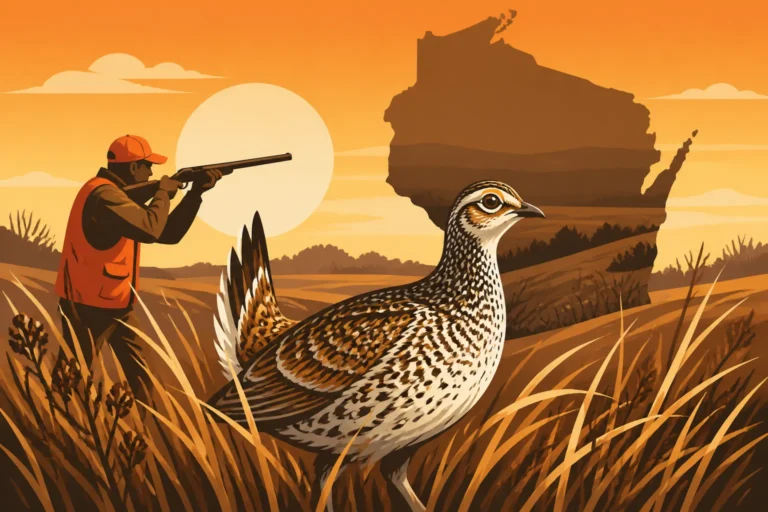
Sharp-tailed grouse, a species specifically adapted to the barrens, require a more open, savanna-like environment. They are often found in larger grassy openings interspersed with sparse brush and scattered trees. Spot-and-stalk techniques combined with careful flushing can be effective, or using a wide-ranging bird dog. Wisconsin Sharp-Tailed Grouse Harvest Zones often overlap with the prime barrens regions, so understanding these specific areas is key. Both species can be found in the barrens, but sharp-tails will typically be in the more open sections, while ruffed grouse prefer denser, younger timber.
Big Game Challenges and Rewards
Hunting deer in the Pine Barrens demands patience and a good understanding of deer movement within this particular landscape. Deer often bed down in the densest jack pine thickets, making still-hunting or stalking incredibly challenging due to the noise of breaking branches and rustling leaves. Focusing on natural travel corridors, such as fingers of slightly thicker timber extending into more open areas, or edges where dense cover meets a swamp or wetland, can be more productive. Scouting for rub lines or scrape lines, especially along old logging roads or trails, can reveal key movement patterns.
Due to the often-dense cover and sprawling nature of the barrens, deer drives can be an effective tactic, particularly with a small group of hunters. Coordinating pushes through thickets towards waiting standers on more open edges or natural funnels can push deer out of their sanctuaries. However, safety is paramount, and clear communication is essential. Being prepared for a close-range shot, even during gun season, is common, as deer often appear suddenly from the dense cover. This also means understanding your firearm's effective range in these conditions.
Leveraging Technology and Scouting for Barrens Success
The vast, sometimes monotonous landscape of the Pine Barrens can be disorienting without proper tools and scouting. Leveraging modern technology and applying traditional scouting techniques will significantly increase your odds of success and ensure you stay safe and oriented in these sprawling public lands.
Essential Mapping and GPS Tools
Given the often remote and expansive nature of Wisconsin's Pine Barrens public land, a reliable mapping and GPS tool is absolutely indispensable. Apps like onX Hunt have revolutionized how hunters navigate these areas. Using the onX Hunt app, you can easily identify property boundaries, distinguishing between public and private land with incredible accuracy. This is particularly vital in areas where public and private parcels are interspersed, like some MFL lands. You can drop waypoints for promising sign, bedding areas, or even your vehicle, ensuring you don't get lost deep in the scrub. The various map layers available, including satellite imagery, topography, and even timber cut data, provide invaluable insights into cover, terrain, and potential travel routes for game.
Many dedicated hunters also leverage resources like GoHunt, particularly if they are planning trips across multiple states or looking for broader trend data. While onX Hunt provides granular, in-the-field mapping, platforms like GoHunt can offer wider-picture research, helping you understand species distribution, harvest reports, and overall public land availability. Combining a robust in-field navigation app like onX Hunt with pre-season research from various sources, including the Wisconsin DNR's Scouting With the Wisconsin Hunt Wild App and broader platforms, gives you a comprehensive advantage. Don't rely solely on cell service, though; download your maps for offline use before you head into areas with spotty reception.
| Game Species | Preferred Barrens Habitat Features | Unique Hunting Considerations |
|---|---|---|
| White-tailed Deer | Dense jack pine thickets, edges near wetlands, scattered mature timber pockets | Focus on thick cover, slow still-hunting, drives can be effective, close shots |
| Ruffed Grouse | Young aspen, jack pine regeneration, dense scrub oak | Use dogs if possible, walk old logging roads and edges, be ready for quick flushes |
| Sharp-Tailed Grouse | Open grassy plains, sparse brush, scattered trees, recently burned areas | Spot and stalk, wide-ranging bird dogs, early morning/late evening activity |
| Black Bear | Dense swamps, berry bushes (summer/fall), secluded thickets | Often incidental during deer season, difficult to target without baiting/dogs |
| Coyote | Open areas, edges of thickets, old roads | Calling can be effective, hunt during winter months, long-range shots possible |
Reading the Landscape for Game Sign
Effective scouting in the Pine Barrens involves more than just looking at a map; it requires learning to "read" the subtle clues the landscape provides. Look for transitions in habitat – where a dense jack pine stand gives way to a more open grassy field, or where a dryer pine ridge drops into a low-lying wetland. These transition zones are natural travel corridors and feeding areas. During the early season, look for areas with abundant berry bushes (blueberries, huckleberries) or acorn-producing oaks, as these are critical food sources for deer, bear, and grouse.
Pay close attention to deer tracks and trails in the sandy soil, especially leading into and out of thick cover. While sandy soil can make it harder to differentiate fresh sign, consistent travel routes will be evident. For grouse, look for dusting areas or evidence of foraging under low brush. In the colder months, focus on south-facing slopes or thick conifer stands that offer thermal cover. Snow cover, when present, can be a game-changer for tracking, making it easier to pinpoint deer movement and identify bedding areas within the seemingly endless scrub. However, Still-Hunting After a Wisconsin Snow requires a different kind of stealth and strategy.
Disclaimer
This article is for general informational purposes only and does not constitute professional advice. Laws, prices and regulations vary by location and change over time. Consult a qualified professional for guidance on your specific situation.