Snow and Forest Road Access Up North
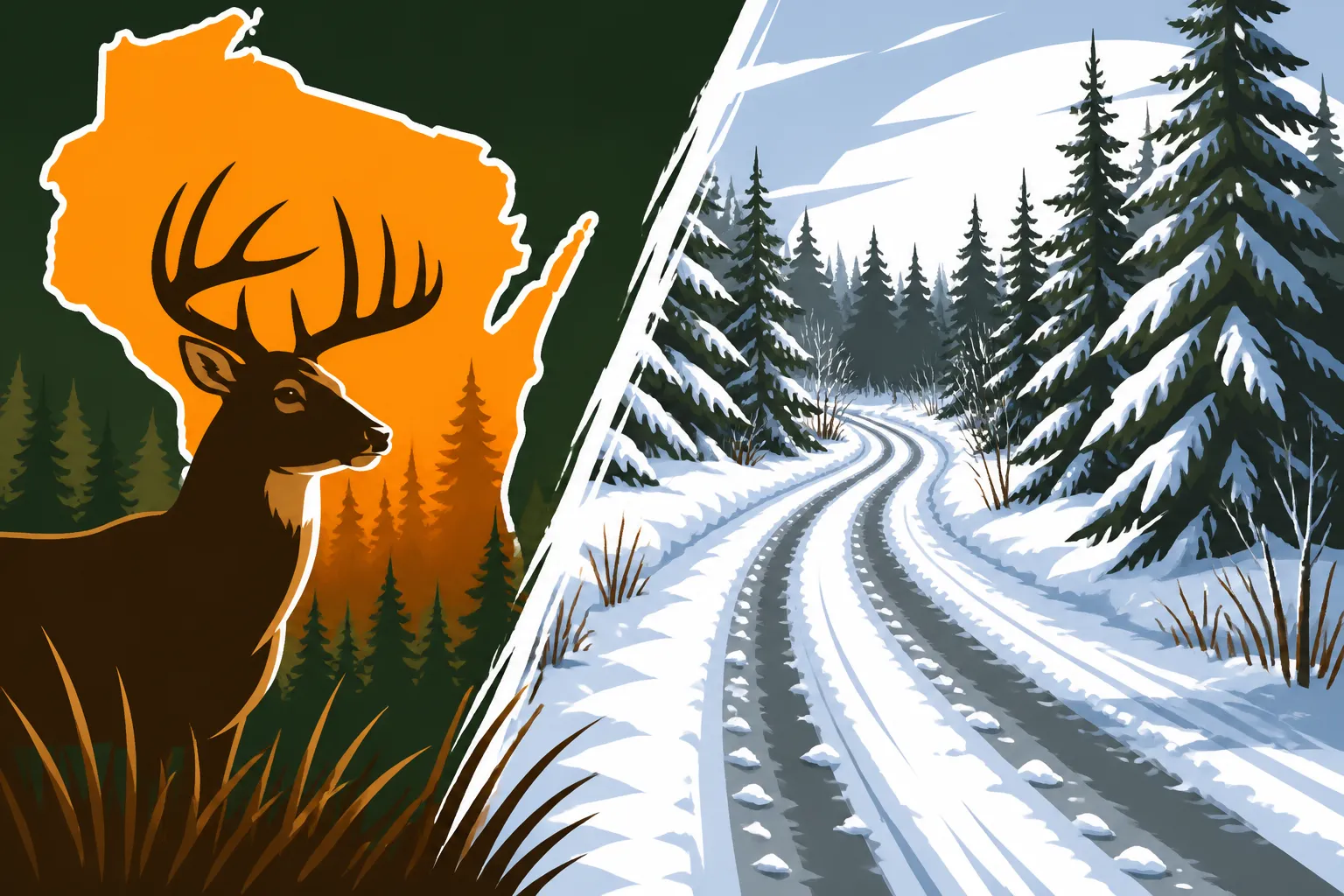
Oh, the crisp air, the silent woods, the promise of a late-season sit or a shed-hunting adventure up in the Northwoods. It’s a feeling I know well, and it often comes with a dose of frustration when you pull up to your usual access point only to find a gate across the forest road, or a snow berm so deep your truck would just become part of the winter landscape. Navigating snow-covered forest roads in Northern Wisconsin presents a unique set of challenges for hunters, but it also unlocks some incredible, less-pressured opportunities. This guide is all about understanding those winter access quirks and how to conquer them safely.
The Unique Challenges of Winter Access on Northern Wisconsin Forest Roads
When the snow flies and the temperatures drop, the entire Northwoods transforms. Those familiar two-track logging roads and forest paths that were easy to navigate with a truck or ATV in the fall suddenly become impassable, or at the very least, a serious test of your winter driving skills. This shift can be a real headache for hunters, but with the right knowledge and preparation, it can also lead you to some of the most rewarding hunting experiences of the year.
Why Snow Changes Everything for Hunters
During the warmer months, we often take for granted the relatively easy access to our favorite hunting spots. A network of paved roads transitions into gravel, then dirt, and finally, those barely-there logging trails that get us deep into the timber. But come winter, even a moderate snowfall can make these routes completely unrecognizable and impassable for standard vehicles. Suddenly, that quarter-mile walk from the truck becomes a mile-long trudge through knee-deep powder, or worse, slush that freezes into treacherous ice. Getting a vehicle stuck miles from the nearest paved road, especially when temperatures are dipping below zero, isn't just an inconvenience; it can quickly become a dangerous situation. There's no roadside assistance out there, and cell service is often a distant memory.
However, this challenge also creates incredible opportunities. The very difficulty of access acts as a filter, discouraging many hunters from venturing beyond the easily accessible areas. This means that if you're willing and prepared to put in the effort, you can find incredibly peaceful and less-pressured hunting grounds for late-season deer, Late-Season Food Sources for Whitetails, ruffed grouse, coyote calling, or even shed hunting after the season closes. The silence of a snowy forest, broken only by the crunch of your boots or the caw of a raven, is a reward in itself, and often, it's where the wise old bucks retreat when the hunting pressure is high.
The Different Types of "Forest Roads" You'll Encounter
The term "forest road" is a bit broad, especially in Northern Wisconsin, because not all roads are created equal when it comes to winter maintenance. You'll encounter a spectrum of routes, each with its own characteristics and plowing likelihood:
- Well-Maintained County Roads: These are typically gravel roads that connect small towns or traverse larger tracts of public land. They're usually plowed regularly, but even they can get icy or have deep drifts, especially in remote areas or during heavy snowfalls. You can generally count on these to be open, but conditions can still be challenging.
- Designated Forest Roads (USFS, DNR, County Forest): These are the primary internal arteries within our national forests, state forests, and Wisconsin County Forest Hunting lands. They are generally wider, graveled, and designed for vehicle traffic. Their winter status, however, is highly variable. Some are plowed to facilitate logging operations or administrative access, while others are intentionally left unplowed or gated for the winter season.
- Old Logging Trails and Two-Tracks: These are the truly "back-forty" routes. Often overgrown, sometimes barely visible, they were cut years ago for timber harvests and might only see occasional use. In winter, these are almost certainly unplowed and will quickly disappear under even a few inches of snow. They become fantastic walking paths, snowshoe trails, or cross-country ski routes, but rarely vehicle-accessible.
The challenge is that under a blanket of white, these distinctions can blur. A heavily snowed-in main forest road can look just like an old logging trail if you're not careful. That's why relying on up-to-date maps and, ideally, prior scouting is absolutely critical. You might see signs like "No Winter Maintenance," "Road Closed," or find a physical gate, but sometimes, the only "sign" is a six-foot snow berm where a plow turned around weeks ago. Knowing these distinctions ahead of time is key to successful winter hunting trips.
Understanding Wisconsin's Forest Road Policies and Plow Status
Navigating Northern Wisconsin's winter roads requires more than just a good four-wheel drive; it demands an understanding of who manages the land and, consequently, who is responsible for keeping the roads open (or closed!). Different agencies have different priorities, and these policies directly impact your ability to access prime hunting ground when the snow is deep.
Who Manages What and Why it Matters for Plowing
In Northern Wisconsin, you'll primarily be dealing with three major land management entities, each with its own approach to winter road maintenance:
- Wisconsin Department of Natural Resources (DNR): The DNR manages State Forests (like Northern Highland-American Legion State Forest or Black River State Forest) and State Wildlife Areas. Plowing on these lands is often limited to main access roads and administrative routes. Secondary roads, especially those leading deep into the woods, are frequently left unplowed or explicitly closed for the winter season to minimize impact on the forest and wildlife, and to avoid dangerous driving conditions. Access for hunters often means parking at a main entrance and walking, skiing, or snowshoeing in.
- U.S. Forest Service (USFS): The vast Chequamegon-Nicolet National Forest Hunting covers huge tracts of northern Wisconsin. The USFS manages a comprehensive network of forest roads. Their plowing schedules are heavily influenced by active logging contracts. If a logging operation is underway, the roads leading to that specific timber sale will likely be plowed. However, once the logging is done, or if a road doesn't serve a current administrative or commercial need, it's often left unplowed. You might find a perfectly plowed road for miles, only for it to abruptly end at a snow-covered berm where a timber sale concluded last week.
- County Forests: Many northern counties, such as Bayfield, Sawyer, Price, and Douglas, manage extensive county forests, offering fantastic public hunting opportunities. These county forests are often more flexible, with road plowing decisions sometimes made at a more local level by county forestry departments. Again, logging operations are a major driver of plowing. Some county forest roads might be plowed consistently for residential access, while others are purely seasonal. To find out about winter road access on these lands, contacting the specific county forestry department is often your best bet.
The crucial takeaway is that plowing is typically a means to an end (logging, administration, or limited residential access), not primarily for recreational hunting access. This means you can't assume a road will be open just because it was accessible in October.
Seasonal Closures and Gates: What to Expect
It's common practice across all Northern Wisconsin land managers to implement seasonal closures on many forest roads. These closures serve several purposes:
- Roadbed Protection: Freezing and thawing cycles, coupled with heavy vehicle traffic, can severely damage gravel and dirt roads. Closing them for winter helps preserve the integrity of the roadbeds, reducing maintenance costs in the spring.
- Safety: Deep snow and ice make many roads treacherous, even for 4×4 vehicles. Closures prevent motorists from getting stuck or into accidents in remote areas where help is far away.
- Wildlife Management: Limiting vehicle access in winter can reduce disturbance to wintering deer, elk, and other wildlife.
- Recreational Management: In some areas, winter closures are implemented to create opportunities for quiet recreation like cross-country skiing, snowshoeing, or snowmobiling on designated trails, without conflict from vehicle traffic.
You'll often find these roads gated or physically bermed with snow (or dirt before the snow flies). Many closures typically go into effect after the gun deer season, often in late November or early December, but this can vary widely depending on the first significant snowfall. A massive early-season dump might lead to earlier closures.
When you see a "Road Closed" sign or a gate, it generally means no motorized vehicles are allowed beyond that point. However, in most cases, foot travel, snowshoeing, cross-country skiing, or even fat biking are still permitted unless explicitly stated otherwise. It's essential to respect these closures. Driving around a gate or through a snow berm can result in fines, damage to your vehicle, or even more severe consequences if you get stuck and require emergency assistance. Always check with the specific land manager for their exact rules regarding non-motorized access beyond closed gates.
Navigating and Planning for Snow-Covered Forest Roads
The Northwoods in winter can be unforgiving if you're not prepared, but absolutely magical if you are. The key to successful winter hunting or exploration isn't just knowing the rules; it's about meticulous planning and leveraging the right tools.
Essential Mapping Tools for Winter Hunting
When the landscape is blanketed in snow, familiar landmarks can disappear, and subtle changes in terrain can become significant obstacles. This is where modern mapping technology truly shines and becomes an indispensable part of your winter hunting kit. Relying solely on a basic road map or your phone's standard navigation app is a recipe for frustration, or worse, getting lost.
High-quality mapping applications, like onX Hunt, are worth their weight in gold for winter access. These apps provide detailed public and private land boundaries, which is crucial for identifying legal access points. More importantly, they often have excellent layers showing different types of roads, designated trails, and even terrain contours. You can use these features to:
- Identify Plausible Routes: See which roads are likely maintained, which are seasonal, and which are merely old logging tracks that will be snowed in.
- Spot Gates and Closures: While not always 100% up-to-date in real-time for every closure, these apps can indicate areas known for seasonal gates or reduced maintenance.
- Plan Foot Travel: If a road is closed to vehicles, you can easily map out your walking, snowshoeing, or skiing route from a legal parking spot.
- Offline Maps: Crucially, many of these apps allow you to download maps for offline use. This is absolutely vital in Northern Wisconsin, where cell service is notoriously spotty or nonexistent in many remote areas. Don't rely on streaming data.
While onX Hunt is a fantastic primary tool, don't forget the value of old-fashioned research. Before heading out, make it a habit to call or check the websites of the local DNR office, US Forest Service ranger district (for areas like the Chequamegon-Nicolet National Forest Hunting), or the specific county forestry department. They often have the most current information on logging operations, road plowing schedules, and specific seasonal closures. Sometimes a quick phone call can save you hours of driving and frustration. Also, remember to utilize the official Wisconsin DNR's Using the Wisconsin Hunt Wild App for some official public land insights, though it might not always have the granular road detail of a dedicated hunting app.
Parking and Access Strategies When Roads are Closed
Encountering a gated or snow-bermed road doesn't mean your hunt is over; it simply means your access strategy needs to adapt. A closed road often becomes an amazing avenue for accessing less-pressured areas, but it requires smart parking and a willingness to put in the legwork.
First and foremost, if a road is gated, you must find legal and safe parking before the closure point. Never block a gate, a plow turnaround, or any access point. You risk having your vehicle towed, interfering with emergency services, or hindering legitimate forest management operations. Look for designated parking areas, wider shoulders, or pull-offs that are clearly outside the path of any potential plows or logging trucks. If in doubt, err on the side of parking further back and walking more.
Once parked, that closed road becomes your highway into the woods. Depending on the snow depth and your personal preference, this could mean:
- Walking: With solid winter boots, you can often walk long distances on a packed or lightly-snowed road.
- Snowshoeing: For deeper, untracked snow, snowshoes are a game-changer, distributing your weight and preventing post-holing, which is exhausting and slow.
- Cross-Country Skiing: If you're comfortable on skis, this can be the most efficient and enjoyable way to cover long distances on relatively flat, unplowed roads.
Don't underestimate the physical demands of winter travel. A mile on a summer trail is vastly different from a mile breaking trail through fresh, deep snow. Account for extra time and energy. If you plan to haul gear (decoys, ground blind, extra layers) or, more importantly, anticipate dragging a deer out, consider using a deer sled or a pulk (a small, sled-like cart designed for pulling gear over snow). This can save your back and make extraction significantly easier, especially after a successful hunt in deep northern Wisconsin snow.
Here's a quick overview of what to expect from different road types:
| Road Type | Plowing Likelihood | Vehicle Access | Recommended Gear for Access | Key Consideration |
|---|---|---|---|---|
| Main Arterials (County/State Roads) | High, regular | Generally good, but watch for ice/drifts | 4WD/AWD, good winter tires | Can still be treacherous; don't assume clear pavement. |
| Main Forest Roads (USFS/DNR/County) | Variable, logging-dependent | May be plowed, gated, or snowed in | 4WD/AWD, snowshoes, map app | Check local agency for current status; plowing can be partial. |
| Secondary Forest Roads/Logging Trails | Very Low | Almost certainly unplowed/impassable | Snowshoes, cross-country skis, pulk | Best for quiet foot access; anticipate breaking trail. |
| Gated/Bermed Roads | None | No motorized vehicles allowed | Snowshoes, skis, deer sled | Legal parking before the gate is critical. |
Gear and Safety for Winter Forest Road Travel
Successfully navigating and hunting from snow-covered forest roads isn't just about knowing where to go; it's also about having the right gear and, most importantly, prioritizing safety. The Northwoods in winter can be a truly wild place, and being unprepared can turn a great hunting trip into a survival situation.
Vehicle Considerations for Snowy Conditions
Your vehicle is your lifeline to and from the remote hunting grounds, so preparing it for winter is non-negotiable. While four-wheel drive (4WD) or all-wheel drive (AWD) is highly recommended for reaching those remote trailheads, don't consider it a magic bullet. Even the most capable 4×4 can get stuck in deep, unplowed snow or on a patch of black ice.
Here’s what to consider for your vehicle:
- Winter Tires: "All-season" tires are a compromise. True winter tires, with their softer rubber compounds and aggressive tread patterns, offer vastly superior traction on snow and ice. This isn't just about getting unstuck; it's about safe braking and handling on slick surfaces.
- Emergency Kit: Always, and I mean always, carry a comprehensive winter emergency kit in your vehicle. This should include:
- A sturdy shovel (a collapsible one works well).
- A heavy-duty tow strap.
- Jumper cables.
- A bag of sand, cat litter, or traction mats for getting unstuck.
- A full tank of gas (you don't want to run out of heat).
- Extra warm clothes, blankets, and high-energy snacks in case you get stranded.
- A powerful flashlight or headlamp.
- Fluid Levels and Battery: Check your antifreeze, wiper fluid, and oil levels before heading out. Ensure your battery is in good condition; cold weather drains them quickly.
- Communication: Cell service is often nonexistent deep in the Northwoods. Don't rely on your phone for emergencies. Consider carrying a satellite communicator (like a Garmin inReach or Zoleo) for truly remote travel, especially if you're alone.
My personal rule of thumb is this: if I have any doubt about my vehicle making it, I park further out. It's much better to walk an extra mile or two than to be stuck in freezing temperatures, miles from help, with no cell service.
Personal Gear and Emergency Preparedness
Once you leave your vehicle, you're on your own, battling the elements. Your personal gear choices are paramount to comfort and safety.
- Layering System: This is the golden rule of cold-weather hunting. Start with a moisture-wicking base layer (wool or synthetic, never cotton!), add insulating mid-layers (fleece, down, or synthetic puffies), and top it off with a waterproof and windproof outer shell. This allows you to adjust your clothing as your activity level changes, preventing both chilling from sweat and heat loss in the cold. Cold Weather Sitting Strategy is all about managing your core temperature.
- Insulated Footwear: Good, waterproof, insulated boots are non-negotiable. Your feet are often the first to get cold. Consider boots rated for sub-zero temperatures, especially if you plan on long periods of sitting or slow walking.
- Head, Hands, and Neck Protection: You lose a significant amount of heat from your head. A warm hat, balaclava, or neck gaiter is essential. Insulated gloves or mittens (with a thin liner glove) will protect your hands.
- Backpack Essentials: Even for a day hunt, your pack should include:
- Plenty of water in an insulated bottle or hydration system to prevent freezing. You can still dehydrate in winter!
- High-energy, easy-to-eat snacks (nuts, jerky, chocolate bars).
- A powerful headlamp with extra batteries. Walking out in the dark after an extended hunt is common, and the woods get dark.
- A fire starter (waterproof matches, lighter, fire steel) and some tinder.
- A basic First Aid Kits for Remote Northwoods Ground.
- An emergency thermal blanket or bivvy sack.
- A compass and a paper map as a backup to your digital tools.
Always, always tell someone your exact hunting location and your expected return time. If plans change, let them know. That simple communication could be the most important safety tool you carry. Winter hunting in Northern Wisconsin offers unparalleled solitude and beauty, but it demands respect and thorough preparation.
Disclaimer
This article is for general informational purposes only and does not constitute professional advice. Laws, prices and regulations vary by location and change over time. Consult a qualified professional for guidance on your specific situation.